Best Time to Visit Bhutan: Festivals, Seasons and Planning
Evorand · 21 October 2026
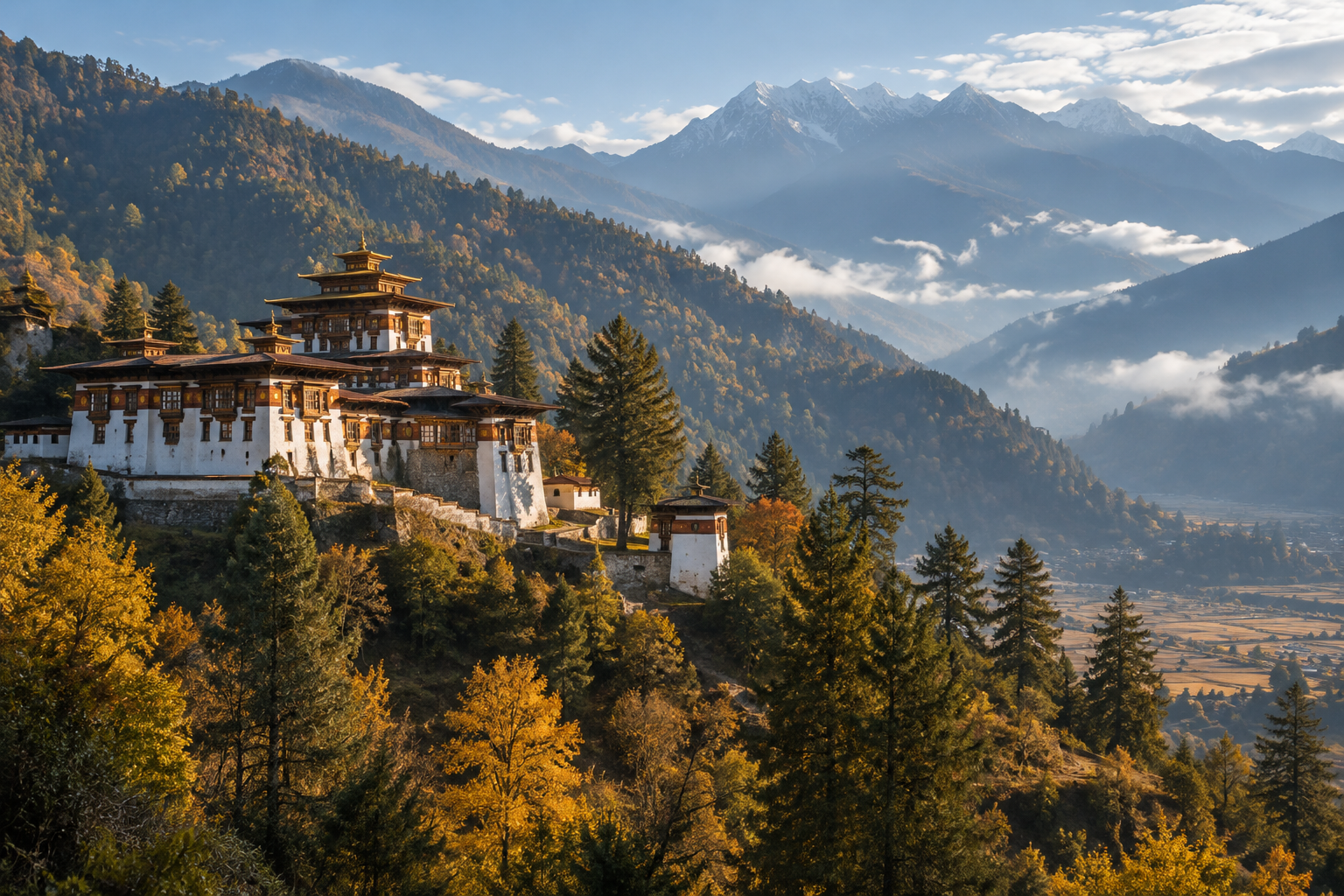
Spring brings flowering valleys; autumn offers stronger prospects for clear Himalayan views. How to choose Bhutan’s seasons, build a journey around a festival and begin preparations at the right time.
The best time to visit Bhutan is generally March to May or September to November, with October and November particularly strong choices for Himalayan visibility. Festival-led journeys should be planned around the confirmed annual calendar, while visa preparation should begin alongside itinerary planning rather than being confused with the much shorter administrative processing period.
The right month depends on what you want to experience: flowering hillsides, clear mountain horizons or a courtyard filled with ceremonial dance. Those priorities sometimes overlap, but they do not always point to the same departure date.
What is the best time to visit Bhutan for your interests?
Spring offers flowers and comfortable valley exploration, while autumn generally provides stronger prospects for clear mountain views and drier walking conditions. Elevation matters throughout the year: conditions in Punakha can differ substantially from those on a high pass.
March to May: spring landscapes and cultural journeys
Spring suits travellers who want to combine monasteries, village walks and forest trails. Rhododendrons flower at different times according to elevation, so a single flowering week should never be promised across the country.
Early spring can retain winter conditions higher up, while warmth and moisture increase towards May. Schedule important viewpoints early where practical: afternoon cloud can obscure distant peaks even when a morning begins brightly.
September to November: clearer horizons after the monsoon
October and November are usually the strongest starting points for a journey centred on mountain visibility. September is transitional, and lingering monsoon rain can still affect plans, particularly earlier in the month.
Autumn is also a popular walking season, but clear skies do not mean warm temperatures everywhere. By November, early starts and evenings can be distinctly cold, especially at elevation.
Can you visit during summer or winter?
June to August brings the summer monsoon, lush valleys and a greater need for flexibility. Rain can obscure mountains, make paths slippery and disrupt road travel; this is a better fit for adaptable cultural exploration than a journey dependent on uninterrupted views.
December to February can appeal to travellers comfortable with cold mornings and a quieter atmosphere. Lower-valley sightseeing may remain rewarding, but snow and ice can affect higher routes and passes.
How should you choose a Bhutan festival?
Choose a festival by its confirmed annual programme and its place within your route, not simply by the month associated with its name. Bhutan’s religious calendar means festival dates shift against the Gregorian calendar.
Paro Tshechu generally falls in spring, while Thimphu Tshechu takes place in autumn. Both are important religious and community gatherings, with masked dances that deserve interpretation rather than treatment as spectacle alone.
Different festival days can feature different ceremonies. If a particular dance or the display of a sacred image is your main reason for travelling, confirm that specific programme rather than relying on the festival’s overall date range.
Arrive in the relevant valley before the day you most want to attend. Combining a long road transfer with an essential morning ceremony creates unnecessary risk, particularly when the programme begins early.
A smaller regional festival may offer a different perspective, but lesser-known does not automatically mean uncrowded or easier to arrange. Choose according to cultural interest, local confirmation and the practical rhythm of the journey.
What does private festival access actually mean?
Private guiding improves interpretation and logistics; it does not turn a public religious festival into a private event. A private vehicle and guide should not be mistaken for reserved seating, restricted-area admission or permission to interrupt ceremonies.
A thoughtful guide can explain the dances, advise on appropriate viewing positions and clarify etiquette before arrival. Photography restrictions, temple opening arrangements and access to particular spaces remain subject to local rules.
Any request for a religious meeting or an unusual visit requires the relevant institution’s consent and availability. Such encounters should remain provisional until explicitly confirmed, rather than serving as the assumed centrepiece of an itinerary.
When are walking conditions most favourable?
Spring and autumn generally offer the best balance for walking, but valley excursions and high-altitude treks require separate seasonal decisions. A clear day in Paro says little about snow conditions on a remote pass.
Paro Taktsang, the Tiger’s Nest monastery, stands at approximately 3,100 metres and involves an uphill approach. Allow an easier introductory day before attempting the walk rather than treating arrival day as an opportunity to complete the principal sight immediately.
Set aside at least a half-day, with additional room for your pace, pauses and the monastery visit. Avoid attaching a demanding onward commitment to a walk whose duration depends on fitness and conditions.
For multi-day trekking, assess the specific route, campsite elevations and current pass conditions. Fitness preparation and appropriate medical advice matter independently of season; comfortable temperatures do not remove the effects of altitude.
How far ahead should you plan, and when should visa preparation begin?
Begin planning several months ahead for a festival-led journey, while timing the visa submission against current official requirements and processing guidance. These are different clocks: securing the right journey may require much more lead time than obtaining permission to enter.
Most international visitors need a visa before travelling, although nationality-specific exceptions apply. Applications can be made through Bhutan’s official online system, either directly or with assistance from an authorised tourism provider.
Check passport validity, required documents, applicable payments and the details needed for each traveller early. A family travelling together may hold different nationalities, so one person’s entry requirements should not be assumed to cover everyone.
The following is a suggested planning framework, not an official visa timetable or a guarantee of availability:
- Around six to nine months ahead: Select a preferred season and festival, then explore flights and accommodation together.
- Around three to six months ahead: Reconfirm festival dates, settle the valley sequence and review passport validity and document requirements.
- In the weeks before departure: Complete the visa process with a margin beyond the current official processing guidance, allowing room for corrections or additional requests.
- Before travelling: Recheck flight arrangements, weather, road conditions and any changes to the ceremony programme.
Fixed holiday dates or particular room configurations are reasons to begin earlier. A flexible cultural journey outside the principal festival periods may offer more latitude, but availability should still be checked before making non-refundable commitments.
How much flexibility should the itinerary include?
Leave room for weather-sensitive flights, winding mountain roads and changes to the daily programme. Bhutan rewards a measured route more reliably than a tightly packed checklist.
When connecting through a regional gateway, avoid treating a short onward connection as risk-free. Check airline schedules, ticket conditions and the consequences of a delay, especially when separate tickets are involved.
A journey through Paro, Thimphu and Punakha should not pair every transfer with an essential timed visit. Adding Bumthang requires additional travel time, not simply another label on the same itinerary.
Before selecting dates, decide which experience matters most and where you can be flexible. Share your preferred season with Evorand to begin shaping Bhutan — The Last Himalayan Kingdom around the landscapes, ceremonies and pace that suit you.
Frequently asked questions
- Is Bhutan a good destination for a Christmas holiday?
- A winter cultural journey can work well for travellers comfortable with cold mornings and evenings. Higher routes may be affected by snow or ice, so the itinerary should be designed specifically for winter rather than copied from an autumn programme.
- Can children visit Bhutan’s festivals?
- Children can generally attend public festivals, but crowds, extended standing and early starts may affect their enjoyment. Plan breaks and check any site-specific arrangements with the local guide.
- What should I pack for Bhutan in October?
- Bring layers for changing temperatures, a warm outer layer, rain protection and walking shoes with reliable grip. Clothing that covers shoulders and knees is appropriate for religious sites.
- Is summer rain constant throughout Bhutan?
- No. Monsoon rainfall varies by location, elevation and day, but dry intervals should not be interpreted as a guarantee of clear mountain views or uninterrupted road travel.
- Should travel insurance cover trekking in Bhutan?
- If trekking is part of the journey, check that the policy covers the planned activities and maximum elevation, as well as relevant medical evacuation costs. Standard travel policies may exclude certain trekking activities or impose altitude limits.