Courchevel Ski In Ski Out Chalets: Arrival and Choosing Your Base
Evorand · 5 October 2026
The right Courchevel chalet begins with two decisions: how you arrive and which slope you want outside the door. A practical guide to airport transfers, village character and verifying genuine ski-in, ski-out access.
Courchevel ski in ski out chalets should offer both departure and return on skis, on routes suitable for your group and subject to snow and piste openings. For arrival, compare flights into Geneva, Lyon or Chambéry with the onward road transfer; a helicopter is a conditional alternative, not a weatherproof shortcut.
Which airport is best for reaching Courchevel?
The best airport for Courchevel is the one that gives you the simplest complete journey, rather than the shortest drive alone. Flight schedules, arrival time, luggage and winter traffic all matter.
Geneva is a practical international gateway, with a road transfer that commonly takes around three to four hours in normal conditions. Lyon is another useful option, while Chambéry offers a shorter road approach but requires closer attention to available flights and operating conditions. Grenoble can also make sense when the flight connection fits.
Treat any quoted driving time as an estimate. Snowfall and holiday changeover traffic can extend the journey considerably, particularly on Saturdays. The exact village and chalet address also affect the final approach.
An earlier landing can be more valuable than a marginally shorter transfer. Arriving with time to settle children and fit equipment usually makes a greater difference to the first morning than saving a little distance on the road.
How should the airport-to-chalet transfer work?
A well-planned transfer accounts for the complete passenger and luggage load, the precise property entrance and the possibility of a delayed flight. “Courchevel” alone is not a sufficient destination instruction.
Confirm ski bags, large suitcases, pushchairs and child seats before choosing a vehicle. Ask whether flight monitoring is included, where the driver will meet you and how waiting time is handled. Appropriate winter equipment matters more than the appearance of the vehicle.
If travelling by rail, Moûtiers-Salins-Brides-les-Bains is the principal station for the onward road journey. Allow roughly an hour or longer for the mountain transfer, depending on the village, traffic and weather. Arrange the vehicle around the train rather than assuming immediate availability on arrival.
For the return, build the departure schedule backwards from airport check-in requirements, allowing a sensible weather and traffic margin. A clear road on arrival does not establish what conditions will be like a week later.
Is a helicopter transfer a better choice?
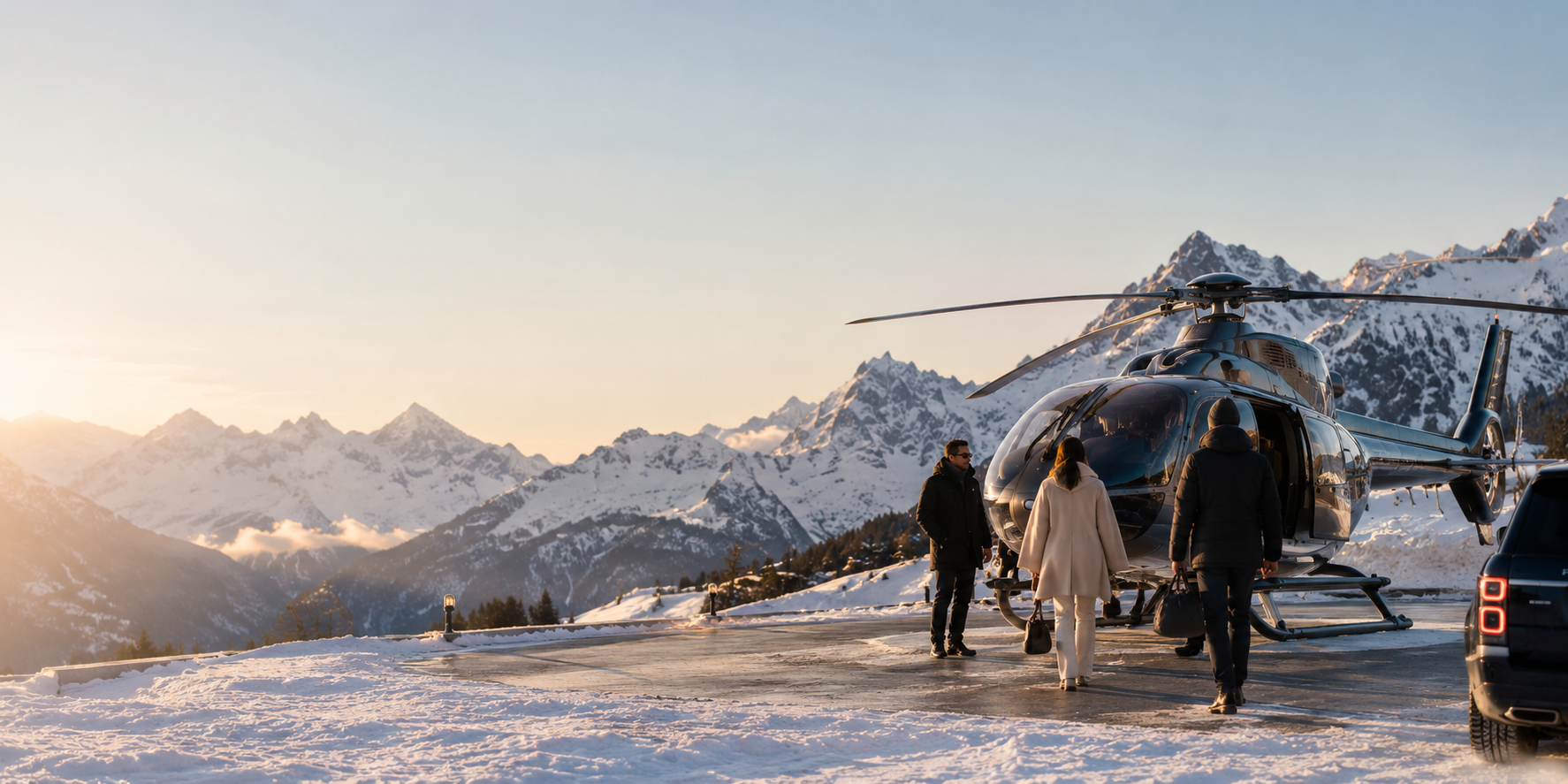
A helicopter can shorten the surface journey when conditions permit, but requires a confirmed road fallback. Visibility, wind, operating permissions and baggage capacity determine whether the proposed flight is practical.
Courchevel Altiport is a specialist mountain airfield with a short, sloping runway, not a conventional airport suitable for every private aircraft. Fixed-wing operations require an appropriate aircraft and qualified crew; feasibility must be confirmed by the operator.
For helicopter transfers, ask which arrival point will be used and how you reach the chalet afterwards. Skis or larger bags may need to travel separately, so establish when they will arrive. Compare the whole door-to-door sequence, including airport formalities, rather than flight time alone.
Where should you look for Courchevel ski in ski out chalets?
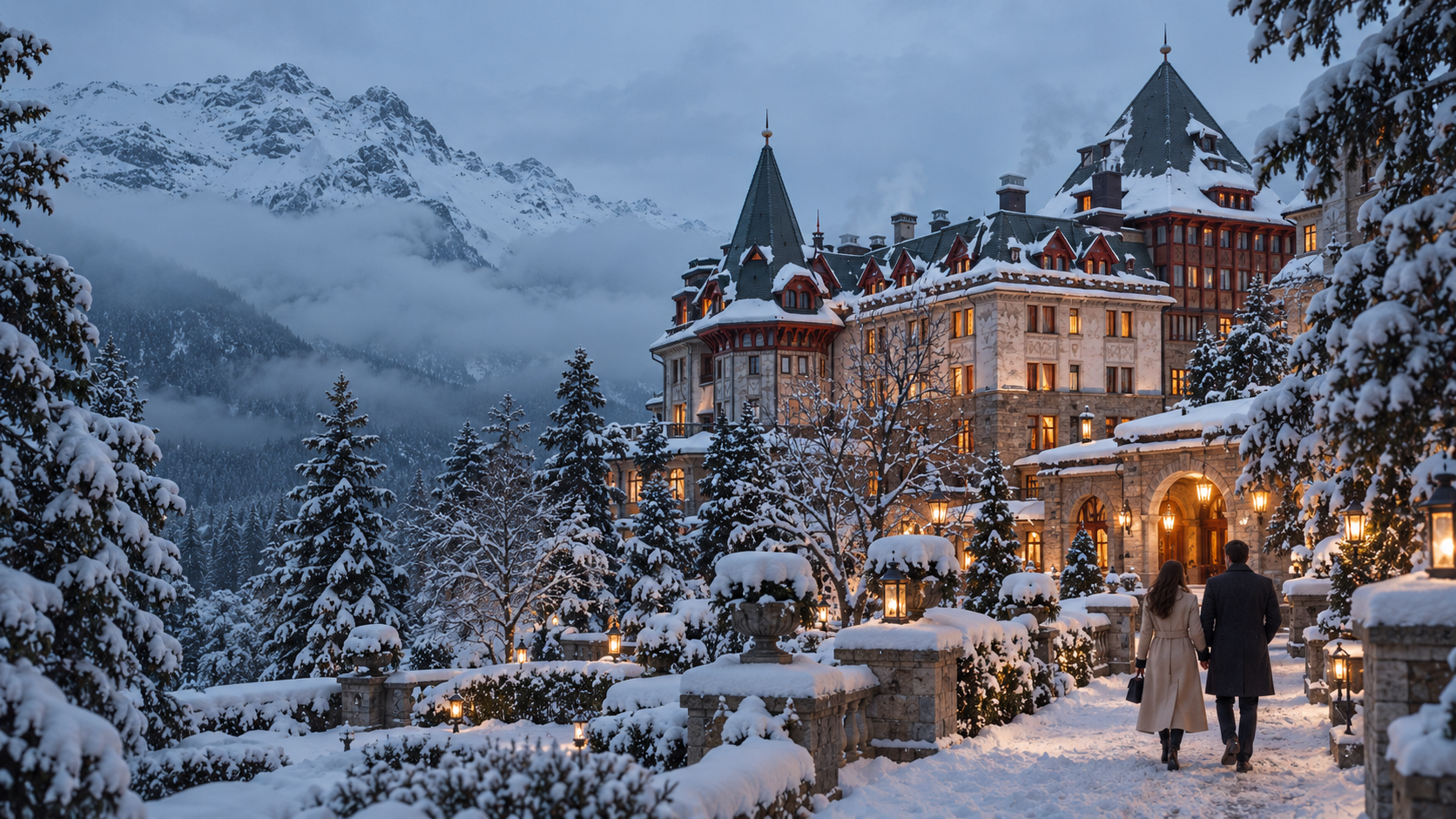
Choose the village around your skiing and your time away from the slopes, then assess individual chalet locations. Courchevel 1850 is the best-known address, but prestige does not settle the practical questions.
Courchevel 1850 concentrates luxury hotels, restaurants and boutiques, making it appealing for mixed groups who want more than skiing. Within 1850, however, a quiet slope-side address can have very different walking access from a property near the centre. Check gradients and evening transport, not just map distance.
Courchevel Moriond, also known as 1650, suits guests who want to spend time around its own ski sector. Courchevel Village, or 1550, has lift links towards 1850, while Le Praz offers a more traditional village setting. La Tania is another option for a quieter, wooded atmosphere.
For families, the ski-school meeting point can be the deciding factor. For non-skiers, independent access to cafés, restaurants and transport may matter more. Do not assume lifts will provide an evening journey home; check operating hours and road alternatives.
How do you verify genuine ski-in, ski-out access?
Genuine ski-in, ski-out access means that both the outward and homeward routes work on skis when the relevant pistes are open and adequately covered. A property described as “close to the slopes” may still require walking or a shuttle.
Request the exact map position, the named connecting piste and recent images of the access route. Inspect departure and return separately: an easy morning exit can conceal a steeper homeward run. The least confident skier in the party should set the standard.
- Are there steps, a road crossing or a walk between the boot room and the snow?
- What are the difficulty grades of the departure and return routes?
- Does either direction require pushing uphill or crossing a long flat section?
- Can beginners reach their lesson meeting point without skiing beyond their ability?
- What transport is available if the connecting piste closes?
- Is the claimed access dependent on a short, exposed stretch of snow?
A chalet beside a piste is not necessarily convenient for a first-time skier. Match the property to the instructor’s meeting arrangements before committing. Excellent access for experienced adults can still mean a daily vehicle journey for children.
When do timing and snow conditions matter most?
Timing affects both road reliability and the usable ski access at the chalet door. Courchevel’s winter season generally runs from December into April, but specific opening dates and piste availability must be checked for each season.
Christmas, New Year and February school holidays call for earlier accommodation and instructor planning. French school holidays are staggered by region, so checking only your own country’s calendar gives an incomplete picture.
At the beginning and end of the season, ask specifically about the final link to the property. The main ski area may be operating while a chalet’s connecting strip is not. Altitude helps, but cannot guarantee coverage at a particular entrance.
If exploring Les 3 Vallées, monitor daily lift status and the connections needed to return. A long mountain lunch should not leave the group beyond the last operating link home.
What should be confirmed before you arrive?
Written confirmation of services and arrival arrangements prevents a beautiful chalet from becoming an impractical base. A chalet rental does not automatically include a chef, housekeeping, a driver or ski equipment.
Establish inclusions, staff hours, meal arrangements and any separate charges. Share allergies and dietary preferences early, and agree what happens if a late flight delays dinner or check-in. Confirm equipment fitting and ski-pass arrangements without overloading the arrival evening.
Private instruction can tailor the skiing day, but does not automatically confer lift-queue priority or permission to use closed pistes. Likewise, a private chalet entrance does not make the adjacent slope exclusive. Ask for the precise scope of any access described as privileged.
Before booking, review cancellation terms, deposits, check-in times and contingency transport. Give non-skiers equal consideration: the strongest base is one that works for the whole party.
To plan Courchevel with Evorand, share your arrival point, skiing preferences and accommodation requirements. Considering the journey and the chalet together is the most useful place to begin.
Frequently asked questions
- Do I need a full Les 3 Vallées ski pass when staying in Courchevel?
- Not necessarily: the appropriate pass depends on where you intend to ski. A Courchevel-area pass and a Les 3 Vallées pass have different coverage, so match the product to your planned routes and lessons.
- Does ordinary travel insurance cover skiing in Courchevel?
- Standard travel insurance may exclude winter sports, mountain rescue or medical evacuation. Check the policy for skiing cover, off-piste restrictions and any altitude limits before travelling.
- Can I cross from Geneva Airport into France without a passport?
- Switzerland and France are both in the Schengen area, but travellers should still carry a valid passport or other accepted travel document and any required visa or residence permit. Temporary checks can occur, and customs rules still apply.
- Can a ski-in, ski-out chalet accommodate non-skiers comfortably?
- Yes, provided the property has suitable pedestrian or vehicle access. Check whether non-skiers can reach the village independently and whether paths are cleared; ski access alone does not establish accessibility.
- Is it better to rent skis or bring my own to Courchevel?
- Renting avoids transporting bulky equipment and allows a local fitting, while bringing your own preserves a familiar setup. If flying with skis, check the airline’s sports-baggage policy and the transfer vehicle’s capacity before booking.