Greenland Private Expedition Cruise: When to Go
Evorand · 14 October 2026
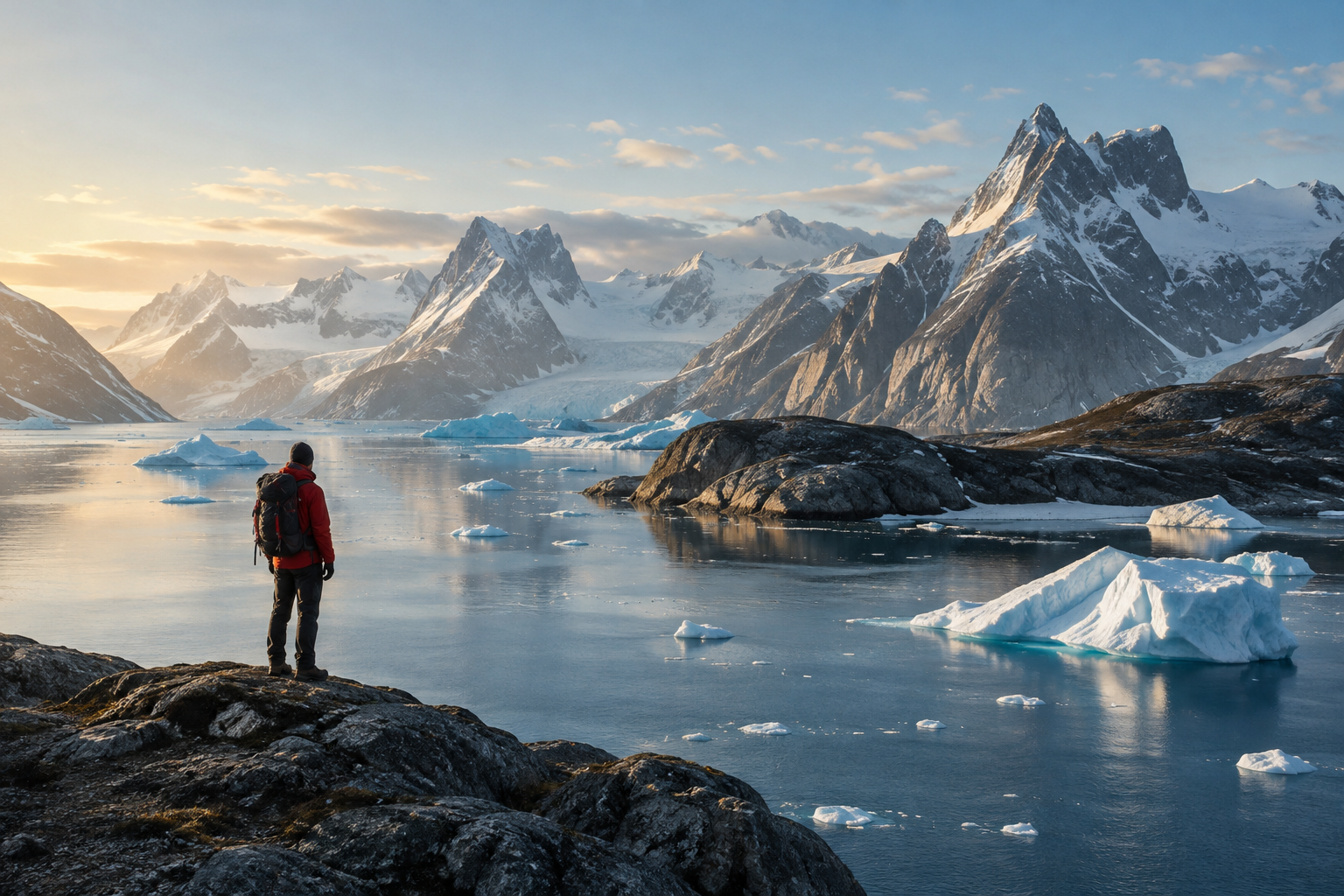
The best Greenland journey begins with the right light, not a fixed itinerary. A practical guide to choosing your season, understanding the ice and planning an Ilulissat-centred expedition.
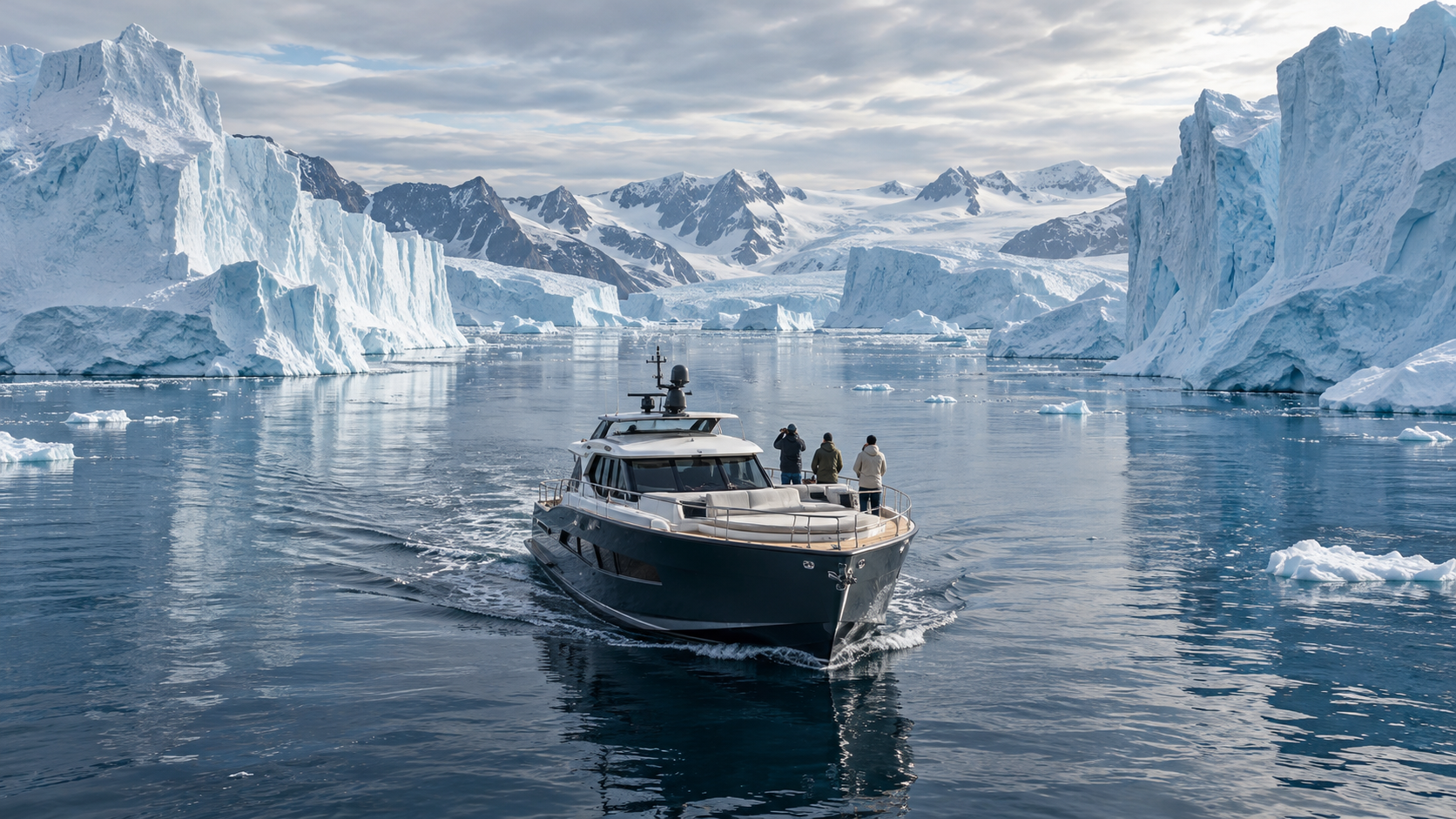
For an Ilulissat-centred Greenland private expedition cruise, June through August is generally the best starting window for iceberg viewing, boat excursions and coastal walks. The final route must remain responsive to ice, wind and visibility; winter travel offers a different experience rather than an interchangeable version of a summer voyage.
Choosing Greenland well means choosing more than a departure date. Daylight determines the rhythm of the journey, ice shapes access, and the accommodation format determines how much time you spend at sea. Begin with the experience you want, then build the calendar around it.
When is the best time for a Greenland private expedition cruise?
Summer is the most practical starting point for an Ilulissat-focused journey combining time on the water with exploration ashore.
That recommendation is regional, not universal. Greenland’s west coast, east coast and far north do not share identical operating seasons or ice conditions. A suitable month for Disko Bay should not be treated as confirmation that an unrelated coastal passage is accessible.
Should you choose June or July?
June and the earlier part of July offer Ilulissat’s distinctive midnight-sun experience. Located north of the Arctic Circle, Ilulissat has a period when the sun does not set, allowing remarkably long hours of usable light. Subject to safe conditions and availability, an evening boat outing can become the defining experience of the day.
Continuous daylight does not remove the need for rest. Avoid filling every available hour, particularly after connecting flights, and bring an eye mask if you are sensitive to light. A late excursion is more enjoyable when the following morning has room to breathe.
What changes in August and September?
August retains summer possibilities while bringing progressively shorter days and the return of darker nights. The light feels different from early summer, and a journey can still combine boat excursions with walking. As September approaches, confirm individual services and sailing schedules rather than assuming the full summer programme continues.
Returning darkness also makes northern-lights viewing possible in principle, but clear skies and suitable solar activity are still necessary. The midnight-sun season is not an aurora-viewing season. Treat any late-summer sighting as a possibility, not the central promise of an iceberg voyage.
Is winter worth considering?
Winter and spring suit travellers drawn to snow, dog sledding and Arctic winter light rather than a summer-style sailing itinerary. Ilulissat experiences a period of polar night, followed by lengthening daylight as the season progresses. Sledding depends on suitable local snow and ground conditions, not simply on booking a winter month.
Do you need winter to see the icebergs?
Ilulissat’s icebergs are not a winter-only phenomenon, because glacier ice and frozen seawater are different things.
Icebergs break away from glaciers and consist of freshwater ice. Sea ice forms when seawater freezes. The UNESCO-listed Ilulissat Icefjord receives ice from Sermeq Kujalleq, and substantial icebergs remain a defining feature of the surrounding landscape during summer.
Open water does not mean unrestricted passage. Drifting ice can narrow an approach, wind can redistribute floating ice, and fog can reduce visibility. A boat journey among icebergs near Ilulissat is not the same as a guaranteed passage to the glacier front.
The skipper determines safe viewing distances. Icebergs can roll or shed large pieces, creating waves around them; getting closer is not inherently a better experience. The most rewarding perspective often comes from understanding the scale and movement of the ice rather than pursuing proximity.
Should you stay in Ilulissat or sleep aboard?
A land-based Ilulissat journey and an overnight expedition voyage are distinct formats with different advantages.
Staying ashore can suit travellers who prefer a consistent base, with private boat excursions requested for suitable days. Coastal walks and time in town can be arranged around the marine programme, subject to local conditions. This format may offer useful flexibility without requiring every night to be spent at sea.
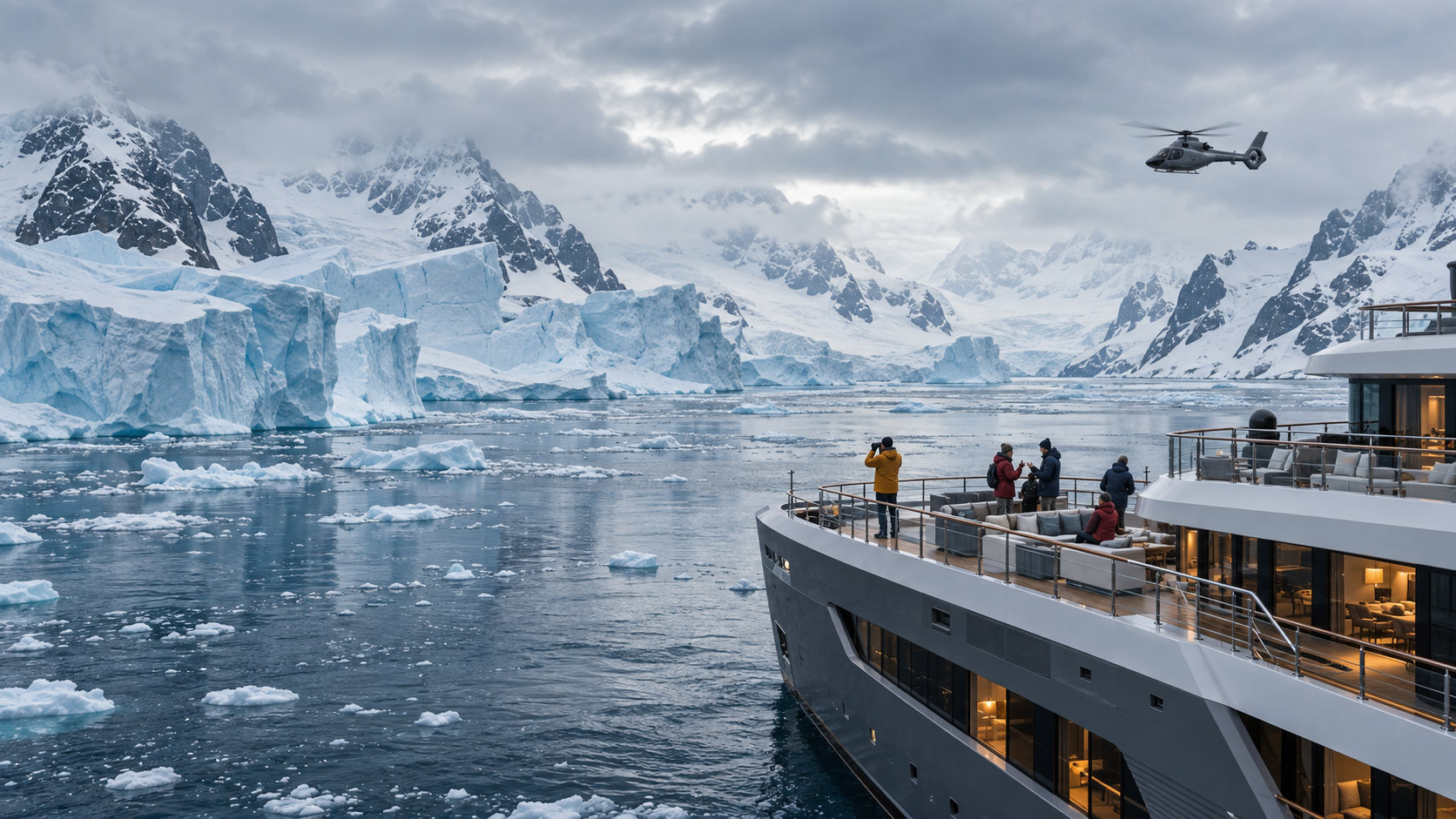
A liveaboard journey requires closer attention to cabin layout, time underway, seasickness and the method of going ashore. A private cabin on a shared expedition vessel is not equivalent to an exclusive-use charter. Ask precisely what is private: the guide, transfers, individual excursions or the entire vessel.
Evorand’s Greenland – Within the Ice journey provides an Ilulissat-centred starting point for a bespoke exploration. Its general description should not be read as a commitment to a named vessel or fixed cruise departure. The accommodation format, scope of private use and time on the water should be established during planning.
How should a weather-dependent itinerary work?
A well-designed Greenland itinerary protects the purpose of the journey while allowing the daily sequence to change.
Rather than reserving the principal boat excursion for the final afternoon, leave room to use the best available weather window. A coastal walk or time in Ilulissat may move to another day. Shore-based alternatives also require a safety assessment; they are not automatically suitable in every condition.
Before confirming arrangements, request clear answers on the following:
- Which activities are confirmed services and which remain conditional on weather or ice.
- Whether a postponed boat excursion can be rescheduled during the stay.
- How cancellations, unused services and substitute activities are handled.
- Whether landings use a quay or require transfers by small boat.
- What mobility, medical or fitness requirements apply.
- How much connection time is allowed before the main flight home.
Private arrangements do not override protected-area rules, local consent or the captain’s decisions. Their value lies in matching the experience to your interests within those boundaries. Visits to communities should respect everyday life rather than treating a settlement as an expedition backdrop.
How do you plan flights and enough time on the ground?
Getting to Ilulissat requires checking current international and domestic schedules together, with sensible margins for disruption.
Connections through Denmark or Iceland may be relevant, depending on your origin and the operating season. An additional flight within Greenland may be necessary after the international arrival. Confirm the actual route before committing to tightly timed services at either end.
Several full days in Ilulissat give a weather-sensitive excursion more than one opportunity to operate. Count those days separately from arrival and departure days, which may offer little usable exploration time. Avoid placing an immovable engagement immediately after the planned return.
If flights are issued on separate tickets, clarify baggage handling and responsibility for missed connections. Insurance should be checked for the intended activities, disruption and medical evacuation, including exclusions and assistance procedures. Remote travel rewards careful preparation more than optimistic connection times.
What should you pack for summer in Ilulissat?
Summer packing should prioritise wind protection, waterproof layers and warmth on the water rather than the calendar’s suggestion of mild weather.
Bring an insulating mid-layer, waterproof outerwear, gloves, a hat and supportive footwear with reliable grip. Sunglasses and sunscreen matter in bright conditions, while insect protection can be useful during the summer. Ask whether specialist marine clothing and safety equipment are supplied rather than assuming they are included.
Discuss limited mobility, previous seasickness and any medical needs before selecting the boat format. A comfortable cabin does not necessarily imply easy boarding or step-free shore access. Clear practical information is more useful than a broad description of comfort.
What should you share with Evorand first?
The most useful initial enquiry states your travel window, party size and the experience you most want to protect.
Specify whether that priority is midnight-sun photography, iceberg viewing from a private boat, unhurried coastal walking or a longer marine journey. Add your preferred accommodation format, date flexibility and any mobility considerations. The next discussion can then distinguish confirmed arrangements from requests and weather-dependent possibilities.
To shape an Ilulissat-centred journey around the right season, begin with Evorand’s Greenland – Within the Ice. A clear sense of the Greenland you want to encounter is the best place to start.
Frequently asked questions
- Does a Schengen visa cover travel to Greenland?
- Greenland is outside the Schengen Area, and a standard Schengen visa does not by itself authorise entry. Travellers who require a visa should confirm Greenland-specific validity with the relevant Danish authority and check the requirements of any transit country separately.
- Can you drive between towns in Greenland?
- Greenland has no road network connecting its towns. Travel between settlements depends on flights, helicopters or boats, according to the route and season.
- Is Ilulissat a good place to see polar bears?
- Ilulissat is not a principal polar-bear-viewing destination, and sightings should not be treated as an expected part of a visit. Follow current local wildlife guidance whenever travelling outside settled areas.
- Can children join an Ilulissat expedition?
- Suitability depends on the child's age, tolerance of cold and the activities selected. Confirm operator age limits, boarding arrangements and correctly sized lifejackets before booking marine excursions.
- Can I fly a drone at Ilulissat Icefjord?
- Drone use is subject to aviation regulations, airport restrictions and protected-area rules. Check current requirements and any necessary permissions with the relevant authorities before planning flights around Ilulissat Icefjord.