How to Bid at Christie's: From Preview to First Auction
Evorand · 23 October 2026

Your first auction begins well before the bidding. A collector’s guide to Christie’s registration, condition reports, bidding methods and the true cost of an acquisition.
The essentials of how to bid at Christie's are to register for your chosen sale, complete the required checks and obtain approval before submitting a bid through an available channel. Before bidding, review the lot’s condition and calculate your maximum commitment including buyer’s premium, applicable taxes and delivery costs.
A first auction need not end with an acquisition to be worthwhile. Seeing objects closely, asking precise questions and declining to exceed a considered limit are all part of becoming a collector.
How to bid at Christie's: Where does registration begin?
Creating a Christie’s account does not automatically approve you to bid in every sale. Register for the specific auction and check that your bidding status is confirmed.
Identity and address information may be required, with additional documentation for companies, representatives and beneficial owners. Depending on the circumstances, Christie’s may request financial information, references or a deposit. Consult the requirements for your particular sale rather than assuming a previous registration covers everything.
Decide who will be the purchaser before registering. The account, invoice instructions and payment arrangements should be consistent with Christie’s requirements; buying through a company or representative is best resolved before auction day.
Which auction should a first-time collector choose?
The best first sale is one in which you can understand and compare the objects, not necessarily the auction attracting the most attention. Begin with a category that already holds your interest.
Build a shortlist by lot number and read each catalogue entry closely. Dimensions, materials, attribution, provenance and accompanying documents matter alongside the estimate. An auction estimate is not a promise of the eventual selling price or future value.
For jewellery, focus on the stones, setting and documentation; for watches, the reference, components and condition. Catalogue symbols and sale notices can identify additional terms or financial interests. Ask the department to explain anything you cannot interpret confidently.
What should you do at the preview?
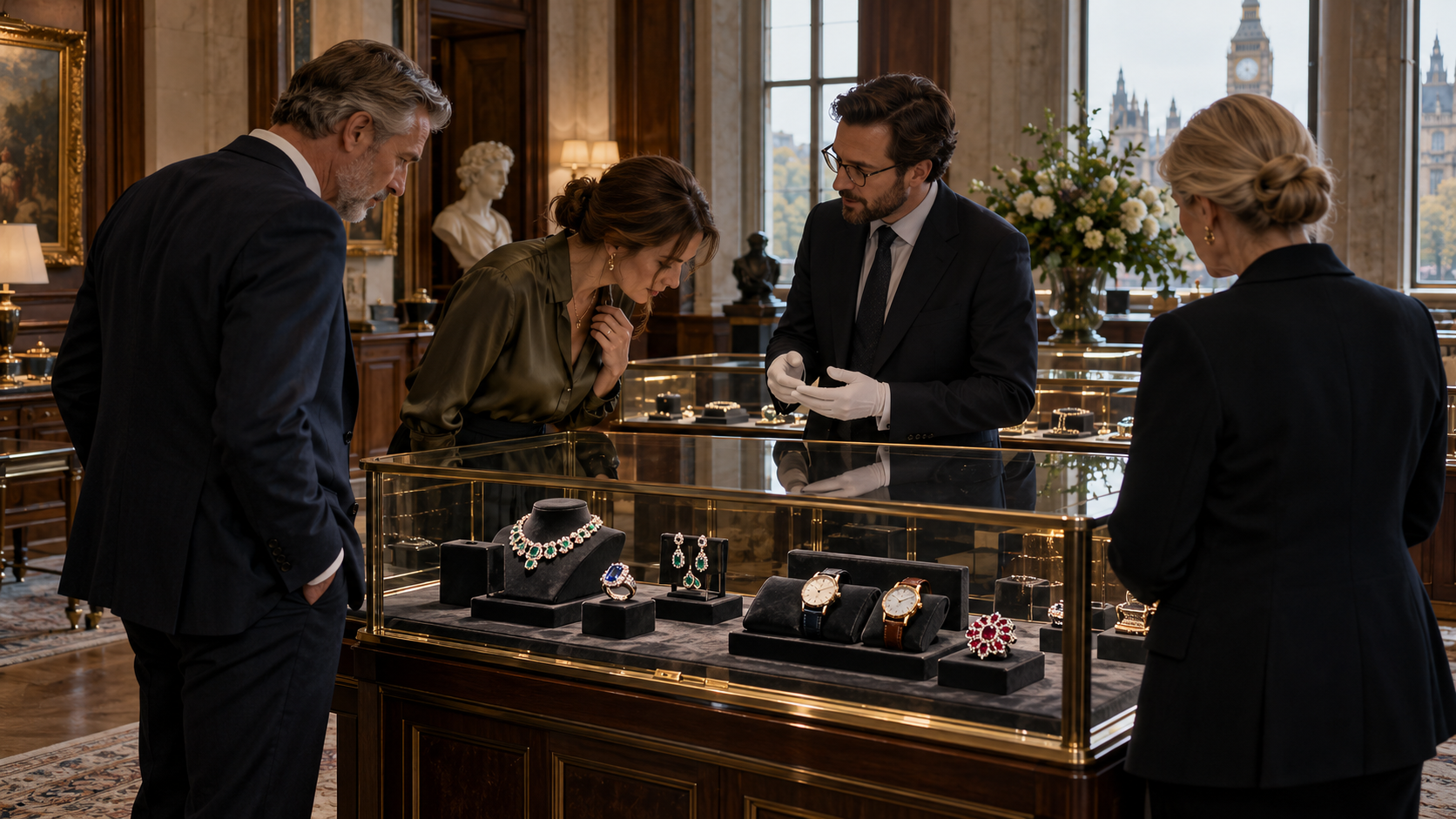
A preview lets you assess qualities that photographs cannot reliably convey, including scale, surface, colour and how an object feels in person. Many auction exhibitions welcome visitors, but opening hours, admission arrangements and appointment requirements must be checked for the particular sale.
Send your shortlist to the department before requesting a specialist conversation. Specific questions are more useful than asking whether a piece is “good”: has a jewel been altered, does a watch have replacement components, or has a painting undergone restoration?
Allow time between viewing and bidding where practical. Arriving the day before the auction can provide room to reconsider, request clarification or revise your limit; this is a planning suggestion, not a required schedule. Handling or trying on objects remains subject to staff supervision and permission.
What does a condition report tell you?
A condition report provides additional information about an object’s physical state, but it is not an exhaustive technical examination or a guarantee that every defect has been identified. Read it alongside the catalogue description and applicable conditions of sale.
Silence about a particular issue should not be treated as confirmation that no issue exists. Request clarification, additional photographs or an independent inspection where appropriate and feasible. An auction-house specialist can explain a lot, but is not your independent buying adviser.
- Jewellery: Ask about repairs, resizing, replaced stones and any treatments recorded in accompanying gemological reports.
- Watches: Check component consistency, service information, replacement parts and whether the box and papers are included.
- Art: Ask about restoration, retouching, surface losses and the condition of the support.
- Every category: Recheck amendments, supplementary notices and the final lot description before bidding.
A watch running during inspection is not necessarily guaranteed for accuracy or water resistance. A gemological report describes particular characteristics of a stone; it does not replace a condition assessment or valuation of the entire jewel.
Which bidding method should you use?
Your available bidding methods depend on the sale format, and not every auction offers every channel. Distinguish a live auction with internet participation from a timed, online-only sale.
Do you need to be in the auction room?
No: eligible sales may offer telephone, absentee and online bidding as alternatives to attending. In the room, use the bidding number issued after registration and watch several lots before yours to understand the auctioneer’s pace.
Telephone bidding needs advance arrangement and confirmation. Agree the contact number, language and any instructions if the connection fails. A reserved telephone line does not confer priority over other bidders.
How do absentee and online bids differ?
An absentee bid authorises bidding on your behalf up to a stated limit under the sale’s rules. That limit generally refers to the hammer price, not the total including premium and taxes.
For live online bidding, test your login and connection beforehand. For timed auctions, check the closing time, time zone and any extension rules triggered by late bids. Travellers should verify the time difference rather than relying on their phone’s previous settings.
How much will you actually pay?
The total purchase cost is the winning bid plus buyer’s premium, applicable taxes and relevant delivery or other charges. The hammer price alone is not the amount to budget.
Use the current buyer’s premium schedule for the specific sale location and category. Rates and thresholds can change, and a schedule from another auction may not apply. Lot-specific tax treatment and, where relevant, artist’s resale royalty can also affect the invoice.
Set an all-in ceiling first, then work backwards to a maximum bid. Reserve room for packing, shipping, insurance, currency conversion, possible storage and import costs. If the calculation is unclear, ask for a written explanation before bidding rather than estimating during the sale.
What happens after a successful bid?
A successful bid creates obligations under the applicable sale conditions, followed by payment and arrangements for release and delivery. Check the invoice and terms for the payment deadline and accepted methods.
Do not assume an acquisition can accompany you on your return flight. Cleared payment, release approval, specialist packing and export documentation may take additional time. Cultural-property restrictions or CITES requirements for materials derived from protected species can affect particular objects.
Confirm destination-country customs requirements before purchase, especially when bringing an acquisition into Türkiye. Establish when transit insurance begins and whether your existing collection policy covers the new object. Travel and object transport should be planned as related but separate processes.
How can an auction visit become a collection-focused journey?
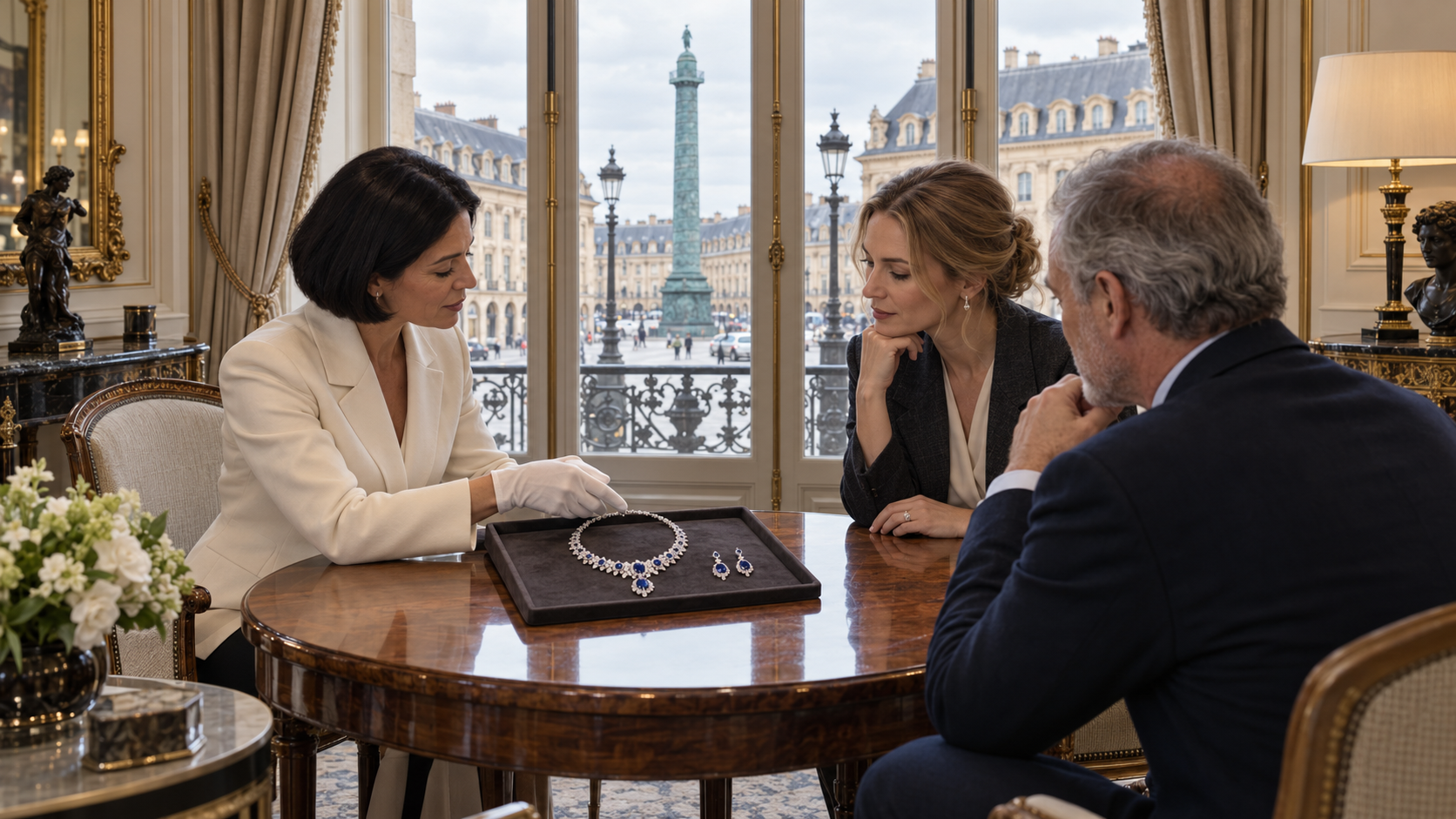
A collection-focused journey combines close looking with informed conversations, rather than placing all its value on winning a lot. Specialist appointments or private viewing requests require confirmation from the relevant institution and do not alter auction rules or bidding approval.
Depending on your interests, these six Evorand experiences offer directions for a wider collecting itinerary. Their scope, timing and access arrangements should be established individually.
- Christie’s Jewels & Collections: The starting point for an auction-centred visit.
- Haute Joaillerie — The Private World of High Jewellery: A Paris direction for exploring high-jewellery craftsmanship.
- Haute Horlogerie: A Geneva focus for developing a deeper interest in watchmaking.
- Private Art Collections: A Paris perspective on the choices that shape a collection.
- Watches and Wonders Geneva: A context for contemporary watch design and new collections.
- Art Basel Basel: A broader view of gallery programmes and artistic practice.
To shape a first preview or a more considered collecting journey, speak with Evorand about Christie’s Jewels & Collections. Your preferred category, destination and available time provide a useful place to begin.
Frequently asked questions
- What is a reserve price at Christie’s?
- A reserve is the minimum price agreed with the seller below which a lot will not be sold, and it is generally confidential. It is distinct from the published estimate; some lots are offered without reserve.
- Can I return an auction purchase if I change my mind?
- Do not assume an auction purchase comes with a general change-of-mind return right. Cancellation rights, remedies and any exceptions depend on the sale format, applicable law and conditions of sale.
- Which currency will I bid and pay in?
- The relevant sale conditions specify the auction and payment currency. Any supplementary currency conversions displayed for convenience do not guarantee the exchange rate or charges applied by your bank.
- Can I buy a lot that did not sell at auction?
- You can ask the relevant department whether an unsold lot is available for a post-sale purchase. Availability and terms depend on the seller’s agreement and the lot’s status.
- Do I need an independent adviser to buy at Christie’s?
- An independent adviser is not generally required to bid. If you appoint one, establish their fees, authority and any compensation or interests involving the seller or other parties before proceeding.