How to Book Jiro Sushi Tokyo: Access and Etiquette
Evorand · 15 October 2026
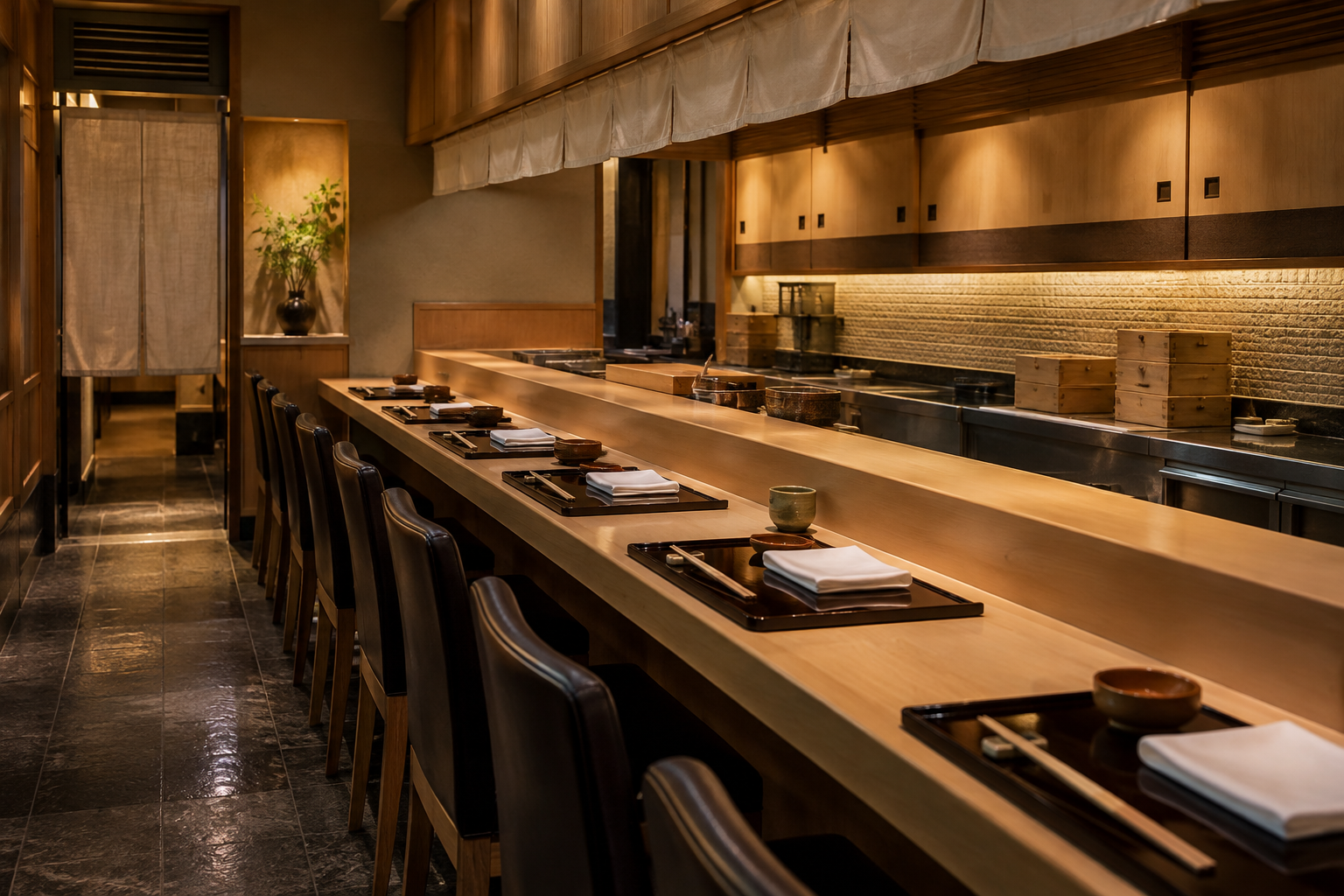
A seat at Sukiyabashi Jiro in Ginza begins with an accepted reservation route, not a public booking calendar. A practical guide to eligibility, counter etiquette and planning Tokyo around an unconfirmed possibility.
If you are researching how to book Jiro sushi Tokyo, the essential distinction is that Sukiyabashi Jiro in Ginza is not a restaurant to approach through an ordinary public booking calendar: enquiries depend on an accepted introduction or concierge channel. An accepted route allows a request to be considered; it does not guarantee a reservation, and current eligibility must be checked.
Founded by Jiro Ono in Ginza in 1965, Sukiyabashi Jiro occupies an exceptional place in sushi culture. Planning a visit requires something less theatrical than its reputation might suggest: precise communication, realistic expectations and respect for a tightly focused dining format.
How to book Jiro sushi Tokyo: where should you start?
Start by identifying the Ginza restaurant explicitly and asking whether your proposed intermediary can currently submit a reservation request. A familiar restaurant name on a booking page is not sufficient evidence.
Sukiyabashi Jiro in Ginza and the related restaurant in Roppongi are separate addresses. Confirm the full restaurant name and location before discussing availability or payment. A reservation at another address should never be presented as confirmation for the Ginza original.
If approaching a hotel concierge, ask whether the hotel has an accepted route for this specific restaurant. A luxury hotel booking does not automatically confer access. Avoid committing to a non-refundable stay solely on the assumption that its concierge can obtain a seat.
Who is eligible to request a reservation?
Eligibility depends on the restaurant accepting the reservation channel, rather than simply on a guest’s budget or willingness to book early. Publicly described routes have centred on existing guest connections and selected hotel concierges; their current scope needs verification.
Ask whether staying at the requesting hotel is required and who assumes responsibility for the booking. A first-time visitor should establish these conditions before arranging travel around the restaurant. An introduction is a means of enquiry, not an allocation of seats.
Private access should mean accurate representation and appropriate coordination, not exemption from the restaurant’s rules. Treat promises of guaranteed admission cautiously, particularly when the intermediary cannot explain the confirmation process or distinguish its own fee from the restaurant’s charges.
What information should your enquiry include?
Prepare one complete brief so that the person handling the request can communicate without repeated clarification. Share payment details only through a verified, secure channel.
- Guest names, party size and the dates you will be in Tokyo.
- Alternative dates and genuine flexibility over available dining times.
- Your accommodation details and a reachable contact number.
- Allergies, dietary restrictions and any inability to eat raw seafood.
- Children’s ages, mobility requirements or other needs requiring advance approval.
- A request for written payment, cancellation, lateness and guest-change conditions.
How far ahead should you begin planning?
Begin assessing feasibility when your Tokyo dates take shape, while recognising that advance preparation and the restaurant’s booking window are different things. Starting early does not necessarily mean a request can immediately be submitted.
Ask when requests are considered, when a response might be expected and how follow-up should work. Do not treat an old travel report’s booking timetable as a current rule. Several possible dining dates offer more scope than one fixed evening, without ensuring availability.
Tokyo’s spring blossom season and autumn travel periods can complicate accommodation planning independently of restaurant access. A quieter travel month is not proof that Jiro will be easier to book. Keep hotel flexibility and dining confirmation as separate decisions.
When is a request actually confirmed?
A request becomes a reservation only when the restaurant or its authorised booking channel explicitly confirms acceptance. “Submitted”, “being explored” and “awaiting a response” are not equivalent to a confirmed seat.
Obtain the address, date, time, party size and applicable conditions in writing. Confirm the current meal charge, any separate service fees and the cancellation liability before accepting. Payment to an intermediary alone does not establish restaurant confirmation.
What should you expect from the meal?
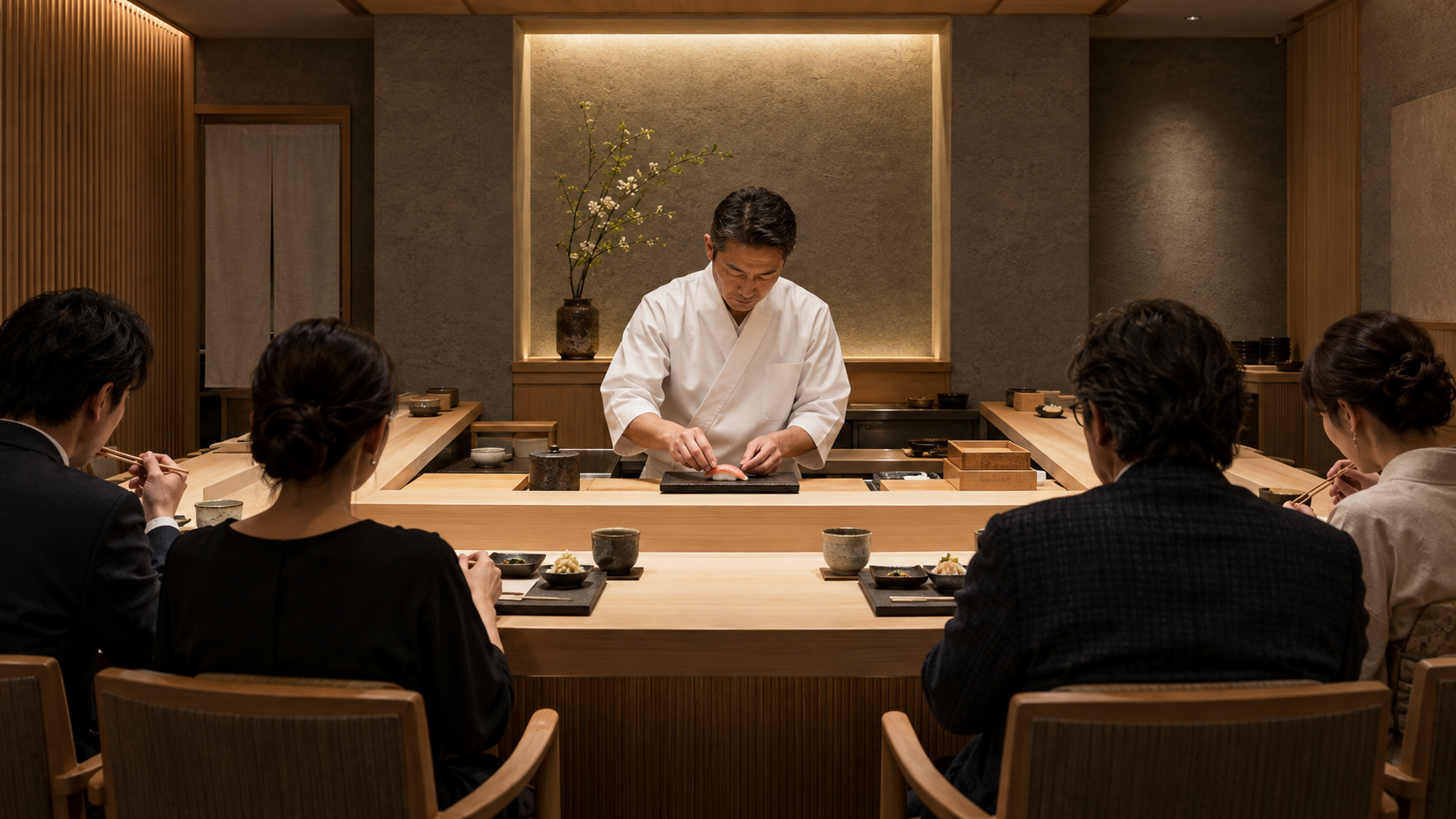
Sukiyabashi Jiro offers a chef-led sushi experience in which the sequence and timing matter more than a prolonged evening at the table. Expect to follow the counter’s rhythm rather than set your own.
Omakase means entrusting the selection to the chef. Ingredients and preparation respond to the menu and available produce, so an old photograph or published course list is not a promise of what you will receive. Arriving with a fixed shopping list of fish misses the format.
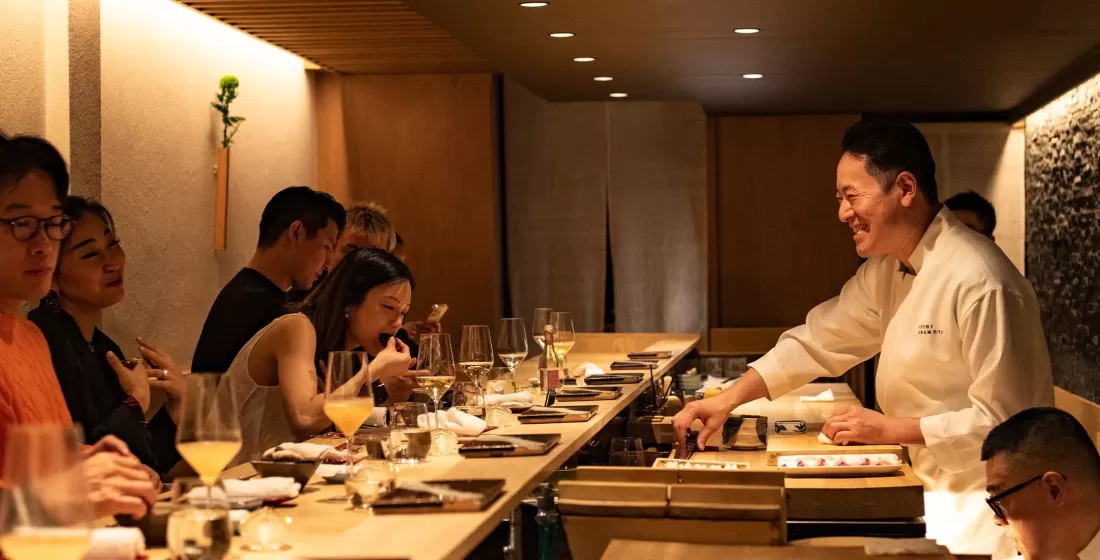
The service can feel concentrated and brisk compared with a European tasting menu. Avoid treating reported meal durations as a guaranteed schedule. The point is the relationship between rice temperature, fish preparation and the moment each piece reaches you.
A reservation should not be interpreted as a promise that Jiro Ono will personally prepare your meal. If meeting the founder is central to your interest, state that expectation before proceeding and ask what can actually be confirmed.
What etiquette matters at the sushi counter?
The essential etiquette is to preserve the pace of service and avoid intruding on other guests’ sensory experience. Attentiveness matters more than an elaborate performance of Japanese dining knowledge.
Avoid strong fragrance, dress neatly and confirm any current clothing requirements in advance. Keep your phone silent and personal belongings off the working counter. Conversation need not disappear, but the room is not a setting for loud calls or an extended business presentation.
Nigiri can be eaten with fingers or chopsticks; handle each piece gently and eat it promptly, ideally in one bite. Do not automatically add soy sauce or wasabi to sushi the chef has already seasoned. A brief question is preferable to guessing.
Check the photography policy before taking out a camera. Even where photographs are permitted, do not interrupt service, ask the chef to pose or include other diners without consent. Recording every piece can distract from precisely what makes counter dining distinctive.
Can allergies or dietary restrictions be accommodated?
Dietary accommodation must be explicitly approved before a reservation is accepted. A specialised omakase counter should not be assumed to offer the substitutions available in a broad-menu restaurant.
Disclose seafood allergies, restrictions on raw fish and relevant ingredient exclusions in advance. Soy sauce may contain wheat, and ingredients that are not visible still matter. For serious allergies, clarify cross-contact concerns; choose another restaurant if safe accommodation cannot be confirmed.
How should Jiro fit into a Tokyo itinerary?
A Jiro-centred visit should remain a worthwhile Tokyo journey even if the reservation cannot be secured. Build the itinerary around your interests, with the restaurant as a possibility until confirmation arrives.
Avoid placing the meal immediately after an international arrival or a tightly timed return from Kyoto. Carry the address in Japanese and establish the building entrance beforehand. Allow a generous travel buffer, then wait nearby rather than arriving excessively early at a small restaurant.
Keep the surrounding hours flexible and consider another sushi counter or a different Japanese dining tradition as an alternative. Avoid conflicting confirmed bookings and their cancellation liabilities. Tokyo’s culinary depth is not diminished by one unavailable seat.
To explore a Jiro-centred Tokyo journey, share your dates and dining priorities with Evorand. The sensible first step is to assess feasibility, then shape the wider visit around what can genuinely be confirmed.
Frequently asked questions
- Do I need to speak Japanese to eat at Jiro?
- Speaking Japanese is not a universal prerequisite for sushi-counter dining, but any current communication or accompaniment requirements at Sukiyabashi Jiro in Ginza should be checked during the enquiry. Allergies and booking conditions should be communicated accurately before arrival.
- Can children dine at Sukiyabashi Jiro?
- Confirm the restaurant’s current child policy and any age conditions through the reservation channel. Provide the child’s age and discuss whether the menu and counter format are suitable before requesting a seat.
- Why was Sukiyabashi Jiro left out of the Michelin Guide?
- The Ginza restaurant was omitted from the Michelin Guide Tokyo’s 2020 edition because it no longer accepted reservations from the general public. The omission was not presented as a downgrade in the quality of its cooking.
- Can I transfer a Jiro reservation to someone else?
- Do not assume a reservation is transferable. Any change of guest should be submitted through the original booking channel and explicitly approved by the restaurant.
- Should I tip at a sushi restaurant in Tokyo?
- Tipping is not generally expected in Japanese restaurants. Pay the stated bill and any disclosed service charge; a courteous verbal thank-you is usually more appropriate than leaving additional cash.