Private Jet Around the World Itinerary: Designing the Pace, Not Just the Route
Evorand · 7 October 2026

A world journey succeeds when the time between destinations receives as much attention as the destinations themselves. How to balance flight sectors, recovery and meaningful contrasts.
A private jet around the world itinerary should be built around realistic flight sectors, protected recovery time and destinations that complement one another. The best route is not the one with the most stops, but the one that leaves enough usable time and energy to experience each place.
Private aviation removes some timetable constraints, not geography or fatigue. Before choosing an aircraft or collecting destinations, decide what the journey should feel like: an expedition, an extended family interval, or a sustained exploration of a particular interest.
How long should a private jet around the world itinerary be?
The right duration depends on usable days on the ground, rather than the number of countries on the map. A night in a destination is not necessarily a day spent experiencing it.
An evening arrival followed by a morning departure leaves little beyond transfers, dinner and sleep. Three nights can provide two full days, depending on flight times. That distinction matters more as the route grows.
Evorand’s Around the World by Private Jet offering describes a 21-day, seven-continent framework, with destinations including Machu Picchu, the Galápagos, the Serengeti and Antarctica. This is an ambitious pace, not a universal template for every traveller. Individual planning must still establish workable connections, meaningful ground time and contingency arrangements.
When the return date is fixed, removing a stop can improve the journey more than upgrading any individual component. Start with the experiences you would most regret missing, rather than a continent count.
What does a flight sector really take out of the day?
A flight sector should be assessed from hotel departure to arrival at the next accommodation, not simply by airborne hours. Transfers and border procedures can turn a manageable flight into a substantial travel day.
Ask to see local departure and arrival times, estimated door-to-door duration and any potential fuel stop. A private terminal can simplify the airport experience where available, but immigration, customs and local handling requirements still apply.
Published aircraft range is only a starting point. Passenger load, luggage, winds, runway conditions and operational requirements affect whether a sector can be flown nonstop. Crew duty and rest rules also shape the schedule.
The nearest runway may not accept the aircraft or provide international entry facilities. A safari airstrip, island landing or remote expedition gateway may require a smaller aircraft and different baggage arrangements. These transitions belong in the first route discussion, not the final briefing.
Where should recovery days go?
Recovery time belongs immediately after demanding transitions and before experiences that require attention or physical effort. It should be protected in the itinerary rather than treated as unallocated space.
After a major time-zone change, keep the first day light: daylight, an undemanding walk, flexible meals and an early night. A tightly timed private visit is rarely the best use of the first hours after a long flight.
Westbound travel can be easier for some travellers, but direction alone should not determine the route. Seasonality, access windows and total flying time may matter more. Crossing the International Date Line also changes the calendar date, requiring careful checks of accommodation nights and onward arrangements.
A sleeping configuration should be assessed for the whole party, not inferred from the aircraft’s seating capacity. Rest on board helps, but does not eliminate jet lag. Travellers with relevant health concerns should seek individual medical advice before the route is finalised.
How do contrasting destinations create a better journey?
Useful contrast changes the demands of a day, not just the view outside the window. Two extraordinary destinations can make a poor pairing if both require repeated early starts or strenuous activity.
Serengeti wildlife viewing often rewards early mornings. Galápagos excursions may involve boat travel, landings, walking and time in the sun. Combining the two can be compelling, but neither should automatically be labelled a restful interlude.
Machu Picchu introduces another consideration: altitude and onward access. Cusco sits at approximately 3,400 metres above sea level, and a regional itinerary should allow appropriate acclimatisation. Arriving in Peru by private jet does not remove the subsequent road and rail logistics.
Balance an expeditionary section with somewhere the party can genuinely slow down. A coast is only restorative if the schedule allows it; a succession of diving trips and boat departures is another active programme. Empty mornings can be a deliberate part of the design.
Which season should anchor the route?
The most season-dependent priority should anchor a multi-continent journey, because no single departure window offers ideal conditions everywhere. Other destinations must then be judged against that choice.
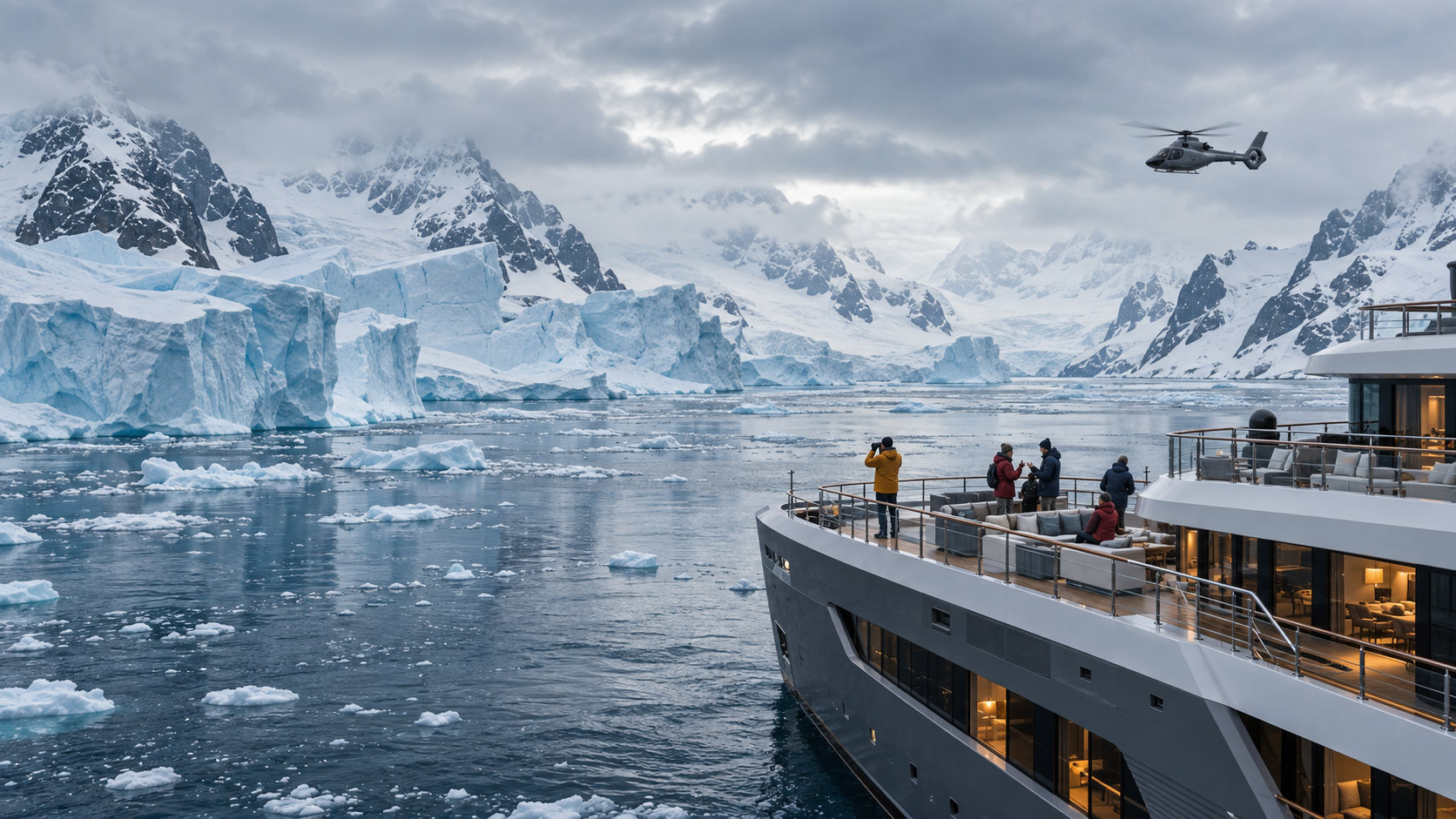
Antarctic tourism generally concentrates in the austral summer, from November to March. Specific flights, landings and sea connections depend on the operation and weather conditions. Antarctica therefore requires a different level of contingency planning from a conventional city stop.
In the Serengeti, wildlife distribution responds to seasonal movement and rainfall; a particular sighting cannot be guaranteed. In the Galápagos, marine conditions and wildlife interests influence the choice of islands and activities.
Ask which seasonal compromises are acceptable. If Antarctica is essential, let its operating window lead the discussion. If a particular wildlife experience is the main purpose, build around that instead of forcing every destination into an imagined shared peak season.
What does private access actually mean?
Private access can improve the setting and depth of an experience, but it does not override conservation rules, permits or local authority. Its precise meaning should be stated before confirmation.
A dedicated specialist, private guide or specially arranged visiting time can be valuable. None necessarily means that a site is closed to other visitors. Exclusive use, private guiding and access outside normal hours are separate arrangements.
Machu Picchu remains subject to ticketing, entry times and designated circuits. Galápagos activities operate within protected-area rules and applicable guiding requirements. A clear proposal distinguishes confirmed arrangements from requests still awaiting permission, and explains the alternative if a requested visit cannot proceed.
What information should you bring to the first planning conversation?
The most useful starting brief combines available time, party size and personal interests with an honest description of preferred pace. Aircraft selection should follow that brief, not dictate it.
- Time: Starting city, possible departure window, compulsory return date and flexibility.
- Party: Adults, children, ages, mobility considerations and whether everyone shares the same interests.
- Priorities: Essential experiences, from archaeology and art to wildlife or marine exploration.
- Pace: Comfortable sector length, tolerance for early starts and desired unscheduled days.
- Practical needs: Sleeping arrangements, luggage, specialist equipment and dietary requirements.
- Boundaries: Budget parameters and which stops could be shortened or removed if conditions change.
Next, test the route against aviation feasibility, ground connections and access availability. Keep flexibility after weather-sensitive sections, and consider obligations immediately after returning home. A journey is not well paced if its final margin disappears before an unavoidable meeting.
To explore Around the World by Private Jet with Evorand, begin with the time you can set aside, the people travelling and the interests that matter most. Those details provide a more useful starting point than a finished list of destinations.
Frequently asked questions
- Do private jet passengers still need visas?
- Private aviation does not remove visa, passport or entry requirements. Each traveller's nationality and each destination, including relevant transit or technical stops, must be checked individually.
- What determines the cost of a private jet world journey?
- Key variables include aircraft type, flying hours, positioning flights, airport charges and ground arrangements. Accommodation, specialist experiences and cancellation or change terms also affect the overall quotation.
- Will the same aircraft be used throughout the trip?
- That depends on the charter arrangement and the route. Remote airstrips or specialist expedition operations may require another aircraft, even when the main intercontinental sectors use the same jet.
- Can large suitcases and camera equipment travel on every sector?
- Baggage allowances depend on aircraft payload, compartment dimensions and operational conditions. Smaller connecting aircraft may impose tighter limits than the main jet, so camera cases and other specialist equipment should be declared during planning.
- Does ordinary travel insurance cover Antarctica?
- Not necessarily: some policies exclude polar regions, expedition activities or remote medical evacuation. Confirm territorial and activity coverage in writing, and check the expedition operator's insurance requirements.