Rwanda Gorilla Trekking Luxury Lodges: Permits, Trails and Comfort
Evorand · 9 October 2026
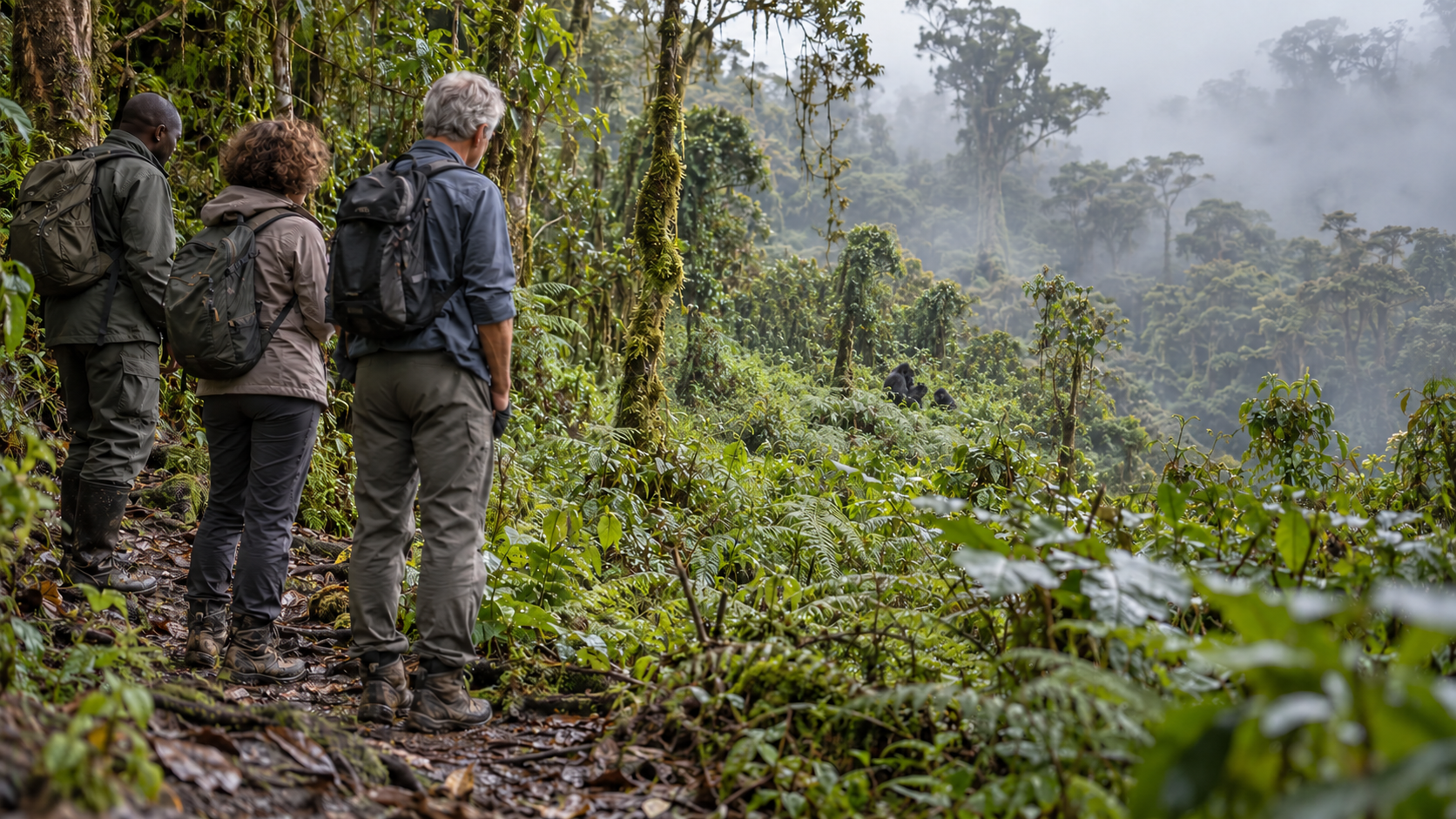
A comfortable gorilla journey begins with the permit, not the suite. How to assess walking demands, choose a well-positioned lodge and understand what private arrangements can—and cannot—change.
The best way to choose between Rwanda gorilla trekking luxury lodges is to secure a compatible permit date first, assess your walking needs and then compare each lodge’s access to Volcanoes National Park. A beautiful suite can improve recovery after the trek, but it cannot shorten the gorillas’ movements or remove the demands of mountain terrain.
How do Rwanda’s gorilla permits work?
A gorilla permit authorises a regulated visit on a specified date; it is not a flexible admission ticket to use whenever you arrive. Availability should be checked through the Rwanda Development Board’s authorised booking channels before committing to non-refundable flights and accommodation.
Standard visits allow a maximum of eight visitors per habituated gorilla family, with normally one hour of observation once the gorillas are reached. That hour does not include the outward walk, the return or the morning procedures. The full excursion therefore requires a considerably larger space in the itinerary.
Ask for written confirmation of the visitor details required, payment deadlines and cancellation or amendment terms. Permit charges and policies should be verified for your travel dates rather than taken from an older itinerary. Accommodation, transfers, porter support and personal expenses also need to be distinguished from the permit itself.
How difficult is the actual walking?
Gorilla trekking has no fixed difficulty because the route depends on the gorilla family’s location, the weather and the terrain encountered that morning. A relatively short distance can still involve steep gradients, tangled vegetation, slippery roots and mud.
The walk may take several hours, and a longer outing remains possible. Altitude can make familiar exertion feel harder, while descending wet ground may be more demanding than climbing it. Regular walking helps, but preparation should also reflect hills, balance and time on uneven surfaces.
Explain mobility considerations before booking, not at the park briefing. A request for a less demanding trek can be considered, but no gorilla family can be guaranteed to remain close to an easy trail. Travellers with joint, balance, cardiac or respiratory concerns should discuss suitability with their clinician and establish what assistance is realistically available.
Will a porter make the trek easier?
A porter can carry your daypack and provide assistance where appropriate, reducing the effort of managing equipment on difficult ground. Porter support does not make the forest step-free or remove fall risks. Any specialist carrying arrangement needs advance confirmation of availability, suitability and park approval.
When is the best time to travel?
June to September and December to February are generally favoured for comparatively drier conditions, although rain is possible throughout the year in Volcanoes National Park. Dry-season travel should never be understood as a promise of dry paths.
Wetter periods can bring atmospheric forest scenes, but they also place greater demands on footwear, waterproofing and confidence on slippery slopes. For travellers assessing physical comfort, those practical differences matter more than the appeal of a quieter calendar. Permit availability still requires checking in every season.
Offer several acceptable dates if you can. Matching a scarce permit with a preferred room category is easier when the itinerary has some flexibility. If your dates are fixed, keep the accommodation shortlist open until the permit position is clear.
How should you compare Rwanda gorilla trekking luxury lodges?
The most useful lodge comparison begins with the morning drive, the property’s internal layout and its ability to support a comfortable return from the forest. Views and architecture come after those essentials, particularly when mobility is a consideration.
Ask for the actual driving time to the park headquarters at Kinigi, including the final approach road. After registration and allocation, there may be a further drive to the relevant trailhead. No lodge location eliminates that variable, because the assigned gorilla group influences the day’s route.
A secluded villa may offer excellent privacy while also requiring steps or a sloping walk to breakfast. Establish the route between your room, dining area and vehicle drop-off rather than accepting a general description of accessibility. Confirm practical services instead of assuming every high-end property provides the same support.
- Early breakfast and arrangements for drinking water and food.
- Boot cleaning and facilities for drying wet outerwear.
- Reliable hot water, suitable room heating and comfortable resting space.
- Steps, gradients and any vehicle access close to the room.
- The precise inclusion of meals, transfers and additional services.
Can the gorilla experience be completely private?
Private transport and accommodation do not automatically create an exclusive gorilla visit, and no private arrangement overrides conservation rules. A standard permit should not be interpreted as a guarantee that only your travelling party will join the group.
If exclusivity is important, ask what arrangements the park currently permits and how they would be confirmed. Even an approved exclusive arrangement would not entitle visitors to unrestricted time, closer contact or a predetermined encounter. The gorillas remain wild animals, not participants in a scheduled performance.
The most valuable personalisation often happens around the trek: clear communication of walking needs, a well-timed transfer and an unhurried afternoon afterwards. Privacy should make the journey calmer without creating unrealistic expectations of the forest.
What happens on trekking morning?
The day begins with registration and briefing at Kinigi, followed by group arrangements and travel to the walking start point. From there, guides lead the approach in coordination with the park’s tracking teams.
Wear broken-in walking boots, long trousers and long sleeves, and carry a waterproof outer layer. Gaiters can help with mud and vegetation; gloves may be useful when negotiating dense growth. Protect cameras from rain and avoid carrying more equipment than you can comfortably manage.
Follow the briefing’s current instructions on distance, masks and behaviour, and never touch a gorilla. Report fever, respiratory symptoms or other potentially infectious illness before participating; a visit may need to be postponed or declined. Human health precautions are part of protecting the gorillas, not an optional inconvenience.
How much time should you allow around the trek?
Spending the preceding night near Volcanoes National Park is a more practical choice than driving from Kigali on trekking morning. The Kigali–Kinigi road journey generally takes around three hours, with traffic, weather and the lodge’s exact location affecting the total.
After a long international flight, a night in Kigali may be preferable before continuing north. Two or three nights near the park can accommodate arrival, trekking and recovery without compressing every movement. This is a planning framework rather than a compulsory stay length.
Avoid relying on a fixed trek finishing time to catch a tightly scheduled international departure. Check that travel insurance covers trekking, applicable altitude conditions and medical evacuation, and review entry and health requirements for your nationality and routing.
To explore Evorand’s Gorilla Trekking journey in Rwanda, share your possible travel dates, mobility considerations and preferred level of comfort. Those details provide the starting point for considering permits, lodge location and the pace of the journey together.
Frequently asked questions
- Can children go gorilla trekking in Rwanda?
- The minimum age for standard gorilla trekking in Rwanda is 15. Families travelling with younger children need separate, age-appropriate arrangements while the adults are trekking.
- Do I need another permit for a second gorilla trek?
- Yes, each trekking date requires a separate permit. A second visit offers another opportunity to observe gorillas, but a different family or an easier route cannot be guaranteed.
- Can I photograph gorillas with a phone?
- Phones can be used for photography, but flash must be switched off and ranger instructions followed. Forest light and vegetation can limit results, and visitors must not reduce the required distance to improve a photograph.
- Is a Rwanda gorilla permit valid in Uganda?
- No. Rwanda and Uganda operate separate park and permit systems, so a journey including gorilla visits in both countries requires separately arranged permits.
- Can a solo traveller join a gorilla trek?
- Yes, solo travellers can book an individual permit and participate in a park-organised trekking group. Travelling alone does not mean walking alone with the gorillas or receiving an exclusive visit.