Where to Stay During Venice Biennale—and Art Basel Miami Beach
Evorand · 20 October 2026
In Venice, the decisive detail may be a landing stage; in Miami, which side of the bay you sleep on. A neighbourhood guide to two very different art journeys.
For travellers deciding where to stay during Venice Biennale, Castello is the most practical base for repeated visits to the Giardini and Arsenale, while San Marco offers a broader city-centre compromise. At Art Basel Miami Beach, choose South Beach within walking reach of the Miami Beach Convention Center if the main fair is your priority.
Where to stay during Venice Biennale: which neighbourhood wins?
Castello wins on proximity to the principal exhibition sites, but the right part of Castello matters more than the neighbourhood name. Venice rewards an address chosen around actual entrances rather than a pin placed somewhere near the waterfront.
The eastern part of Castello places you close to the Giardini, while addresses around the Arsenale suit visitors returning to that exhibition over several sessions. Check both routes before booking: proximity to one does not mean an equally short walk to the other.
A nearby room also changes the pace of the day. You can pause after a demanding exhibition, leave catalogues behind and return for another visit without turning the interval into a transport exercise.
Is San Marco or Dorsoduro a better all-round base?
San Marco suits a mixed itinerary across Venice, while Dorsoduro appeals to travellers giving established art institutions as much attention as the Biennale. Neither should be chosen on atmosphere alone.
From Piazza San Marco, allow approximately 15–20 minutes on foot to the main Arsenale entrance and roughly 25–35 minutes to the Giardini, depending on pace and crowds. These are indicative walks from the square, not hotel-to-exhibition guarantees; bridges and entrance queues add their own demands.
Dorsoduro places the Peggy Guggenheim Collection and Punta della Dogana within the neighbourhood. Their exhibitions and opening arrangements operate independently of the Biennale, so build the day around confirmed schedules rather than assuming every institution will be available whenever you pass.
Should you consider Giudecca?
Giudecca works best when separation from the busiest streets is a deliberate priority. There is no pedestrian bridge to Venice’s historic centre, making boat schedules, hotel shuttle arrangements where available, and late-evening return plans part of the accommodation decision.
How much transfer time should you allow in Venice?
Venice transfer planning must include the walk to the landing stage, the boat journey and the final approach to the exhibition. A private water taxi can remove changes of transport, but it is not automatically faster than walking.
Ask whether the hotel has its own usable landing stage and whether access is suitable for your party. An apparently waterside property may still involve carrying luggage along a lane or over a bridge. Guests with reduced mobility need the complete arrival route checked, not simply confirmation that the hotel has a lift.
For Marco Polo Airport arrivals, compare direct water transport with road-based options followed by the necessary boat or walking connection. Avoid placing an important appointment immediately after arrival: baggage collection, boat availability and the final approach are separate stages.
Where should you stay for Art Basel Miami Beach?
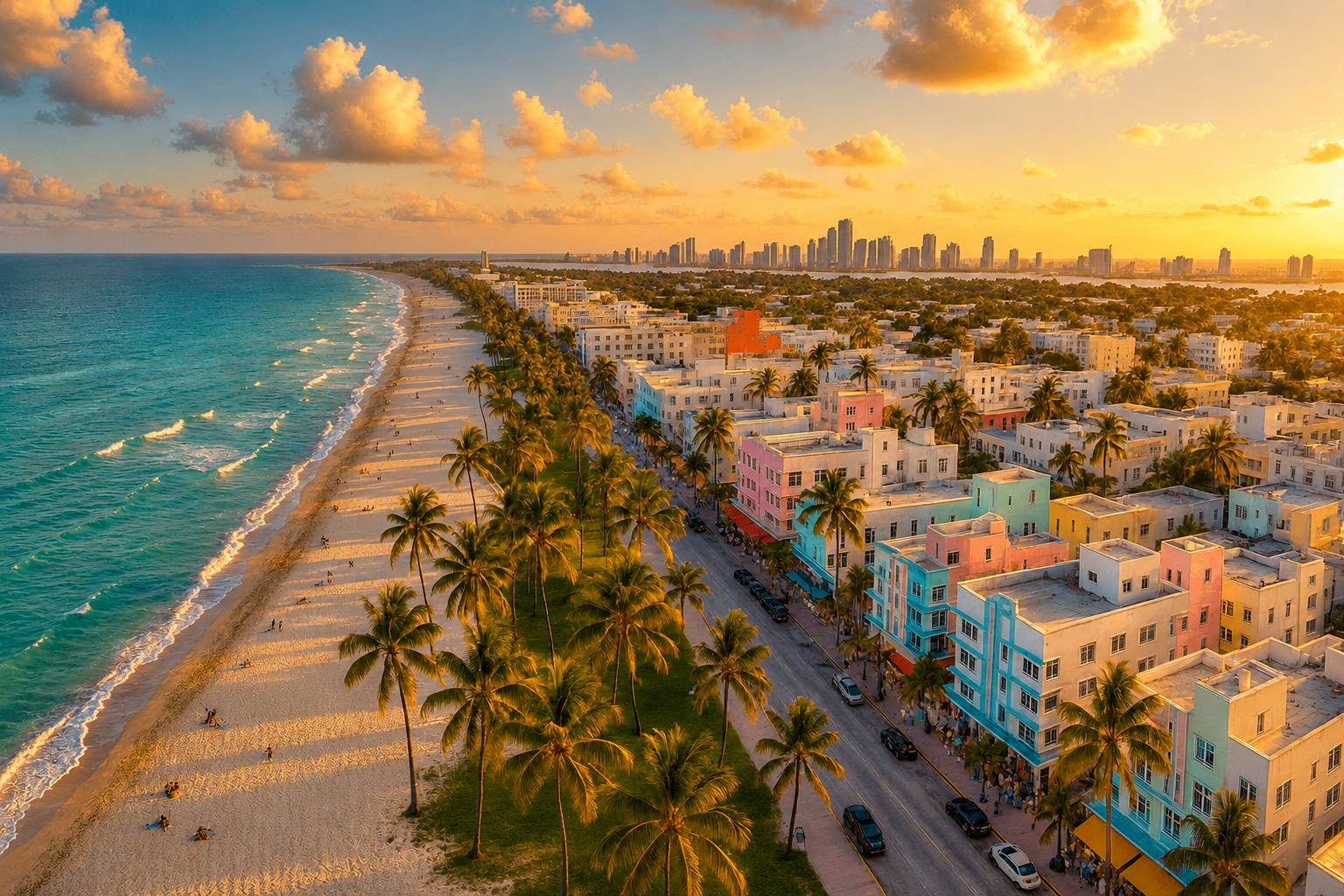
South Beach near the Miami Beach Convention Center is the clearest choice for a fair-led visit. Staying on Miami’s mainland can make sense, but it exchanges walking convenience for road transfers across the bay.
Look closely at the Convention Center side of South Beach, including the area around Lincoln Road and the corresponding stretch of Collins Avenue. South Beach covers more ground than its name suggests; verify the route to the entrance you will actually use.
Mid-Beach is worth considering when beach time and hotel facilities are integral to the trip. The trade-off is dependence on transport for the main fair, so plan one substantial fair session rather than repeated journeys back and forth.
Room position deserves attention during art week. Ask about scheduled hotel events, music and street exposure, particularly if your itinerary alternates early appointments with late dinners.
When does Miami’s mainland make more sense?
A mainland base is sensible when most confirmed appointments are in Downtown, Brickell, the Design District or other mainland art destinations. It is less persuasive when the Convention Center remains your daily anchor.
Group Design District and Wynwood visits geographically, checking the current addresses and hours of galleries, exhibitions and private collections. Satellite fairs and design events have their own arrangements; do not build a new trip around an old event map.
During art week, causeway traffic and simultaneous event departures make fixed cross-bay journey promises unreliable. A private driver simplifies collection, but cannot remove congestion. Confirm pickup points, use live traffic estimates and leave a meaningful margin before timed admissions.
Miami International Airport arrivals deserve similar flexibility. Immigration, baggage and road conditions make the arrival afternoon a poor place for an appointment that cannot move.
When should you travel, and how long should you stay?
Miami requires planning around a concentrated fair period, whereas Venice offers a longer exhibition season. Art Basel Miami Beach generally takes place in December; Venice’s International Art Exhibition is biennial, with dates confirmed for each edition.
Check that you are booking for the Art Biennale rather than the separate Architecture Biennale. Opening-period professional activity and ordinary public visiting days are different experiences, with different admission arrangements.
As an itinerary recommendation, allow three or four nights for Miami and at least three full art days for Venice. In Venice, give the Giardini and Arsenale separate days, then reserve another for citywide pavilions and exhibitions. These are useful starting points, not claims that either event can be comprehensively covered in that time.
What does private access actually include?
Private guiding, preview admission and an invitation to a closed event are separate services and permissions. None follows automatically from booking a particular hotel or arranging private transport.
Start with the artists, galleries or collecting interests that matter to you. Suitable visits can then be identified, with host or organiser approval sought where required. Named invitations, guest registration and permitted time slots should be confirmed individually; some invitations cannot be transferred.
In Miami, Art Basel admission is distinct from satellite fairs and collection visits. In Venice, the main exhibition, national presentations around the city and independent exhibitions do not share one universal booking system. Keep unconfirmed invitations outside the fixed core of your itinerary.
What should be checked before confirming the hotel?
The strongest hotel shortlist is built after the exhibition map, not before it. A celebrated address is only useful if its location supports the trip you intend to make.
- Daily geography: Plot priority exhibitions and evening engagements together.
- Actual entrances: Confirm the visitor door, not merely the venue address.
- Transport: Check Miami pickup arrangements and Venice landing stages.
- Room conditions: Ask about event noise, accessibility and space to pause between visits.
- Booking terms: Review cancellation rules, minimum stays and arrival arrangements in writing.
Protect some unscheduled time each day. A conversation with a gallery or an unexpectedly absorbing pavilion is a good reason to linger; an itinerary with no slack makes that difficult.
Plan these as two distinct art journeys with Evorand’s Art Basel Miami Beach and Venice Biennale programmes. Share your interests and preferred dates to begin shaping the neighbourhood, visits and access requests around the art you most want to see.
Frequently asked questions
- Does a Venice Biennale ticket cover every exhibition in Venice?
- Admission to the main Biennale exhibition does not provide universal entry to Venice’s museums and independent exhibitions. Some citywide presentations are free, while others have separate tickets or reservation requirements.
- Can a first-time buyer purchase work at Art Basel Miami Beach?
- You do not need an established collection to enquire about buying a work; purchases are discussed with the exhibiting gallery. Availability, payment, shipping, insurance and any import obligations require separate confirmation.
- Is the Venice Film Festival in the same area as the Art Biennale?
- The Venice Film Festival is centred on the Lido, while the Art Biennale’s principal exhibition sites are the Giardini and Arsenale. Accommodation chosen for the film festival may therefore be less convenient for an art-focused visit.
- Is photography allowed inside the fairs and pavilions?
- Photography policies vary by venue and individual artwork. Flash, tripods and professional equipment may be restricted, and private collection visits require the host’s permission before taking photographs.
- Are these trips suitable for someone travelling with a less art-focused partner?
- Both destinations support parallel interests alongside exhibition visits. Miami Beach offers coastal time and design destinations, while Venice offers architecture, historic collections and neighbourhood walks.